The Power of Veterinary Website Optimization
To improve your veterinary website’s performance:
- Make sure your site loads fast and works well on phones.
- Optimize your Google Business Profile to show up in local searches.
- Publish helpful content for pet owners.
- Include clear buttons that tell visitors what to do next.
- Encourage and respond to online reviews.
- Track your site’s traffic and user behavior.
Your veterinary website is often the first impression potential clients get of your practice. Veterinary website optimization means making sure your site works perfectly, gets found easily online, and helps pet owners choose your clinic. A strong online presence is not just nice to have. It’s essential for attracting new clients and building trust in your community, especially in competitive areas like Salt Lake City and South Jordan, Utah.
A well-optimized website acts as your digital front door, welcoming pet owners and showcasing your expertise. It helps you stand out from other practices and offers a smooth experience for visitors. This guide will walk you through the key steps to make your veterinary website a success.
I’m Craig Flickinger BB, founder of Burnt Bacon Web Design, based right here in South Jordan, Utah. With over 10 years of experience helping businesses like yours with web design and SEO, I’ve seen the power of effective veterinary website optimization. My team and I are passionate about helping veterinary practices in the Salt Lake City and South Jordan areas stand out online.
The Foundation: A User-Friendly Website Experience
Your veterinary website is like your clinic’s digital waiting room – and just like your physical space, it needs to feel welcoming and work smoothly. When pet owners land on your site, they’re forming their first impression of your practice. Will they feel confident booking an appointment, or will they click away to find another vet?
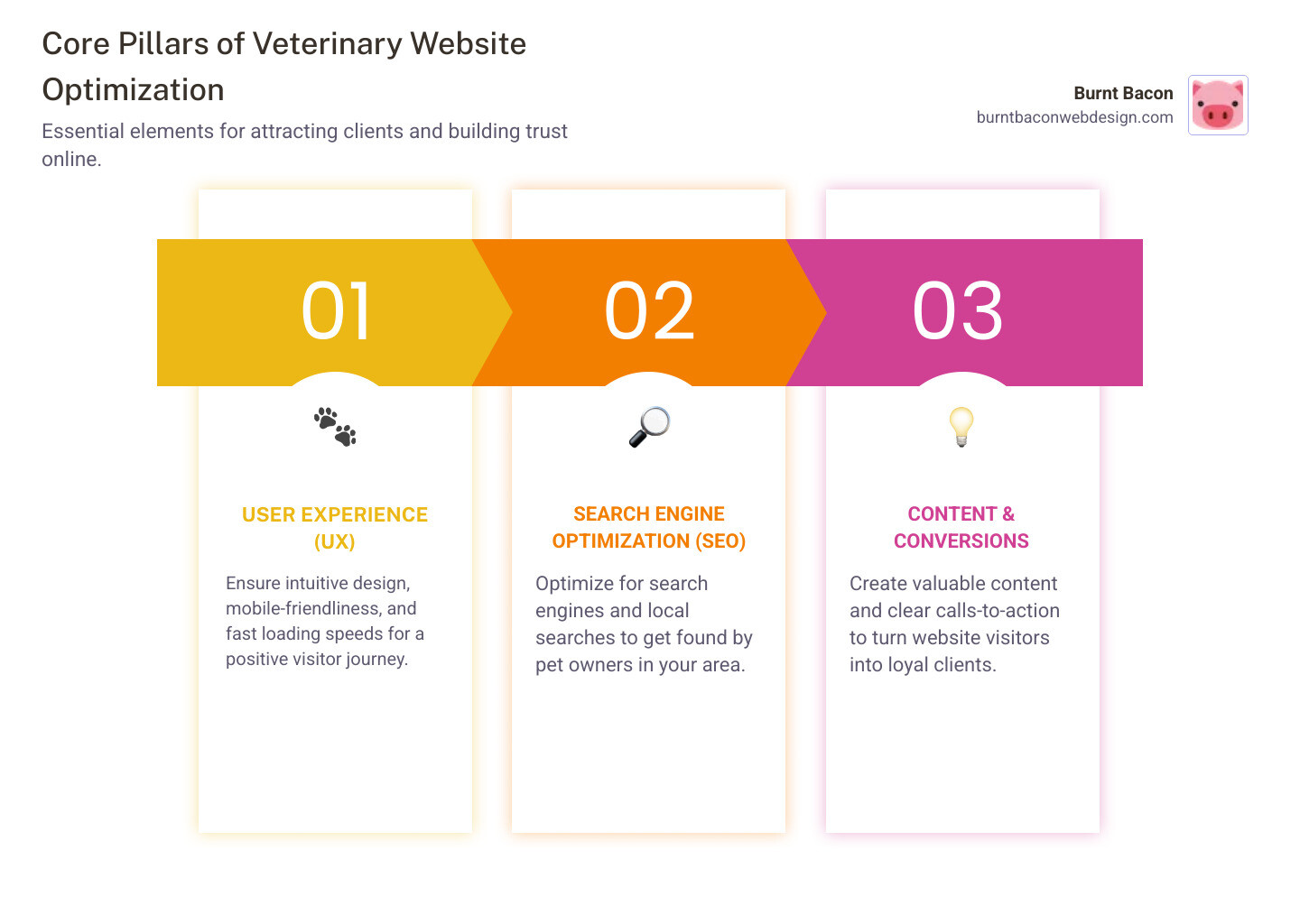
The foundation of successful veterinary website optimization rests on creating an exceptional user experience (UX). This isn’t just about making things look pretty – it’s about building trust, making information easy to find, and ultimately turning worried pet parents into loyal clients.
Designing for Pet Owners
When a pet owner visits your website, they’re usually looking for something specific – and they want to find it fast. Maybe their dog just ate something suspicious, or they need to book a routine checkup. Your site’s intuitive navigation needs to get them where they’re going without any frustration.
The most important elements should be front and center. Your contact information – especially your phone number – should be visible on every page. Pet emergencies don’t wait, and neither should your visitors. Your hours of operation need to be prominently displayed too, because nothing’s more frustrating than calling a closed clinic.
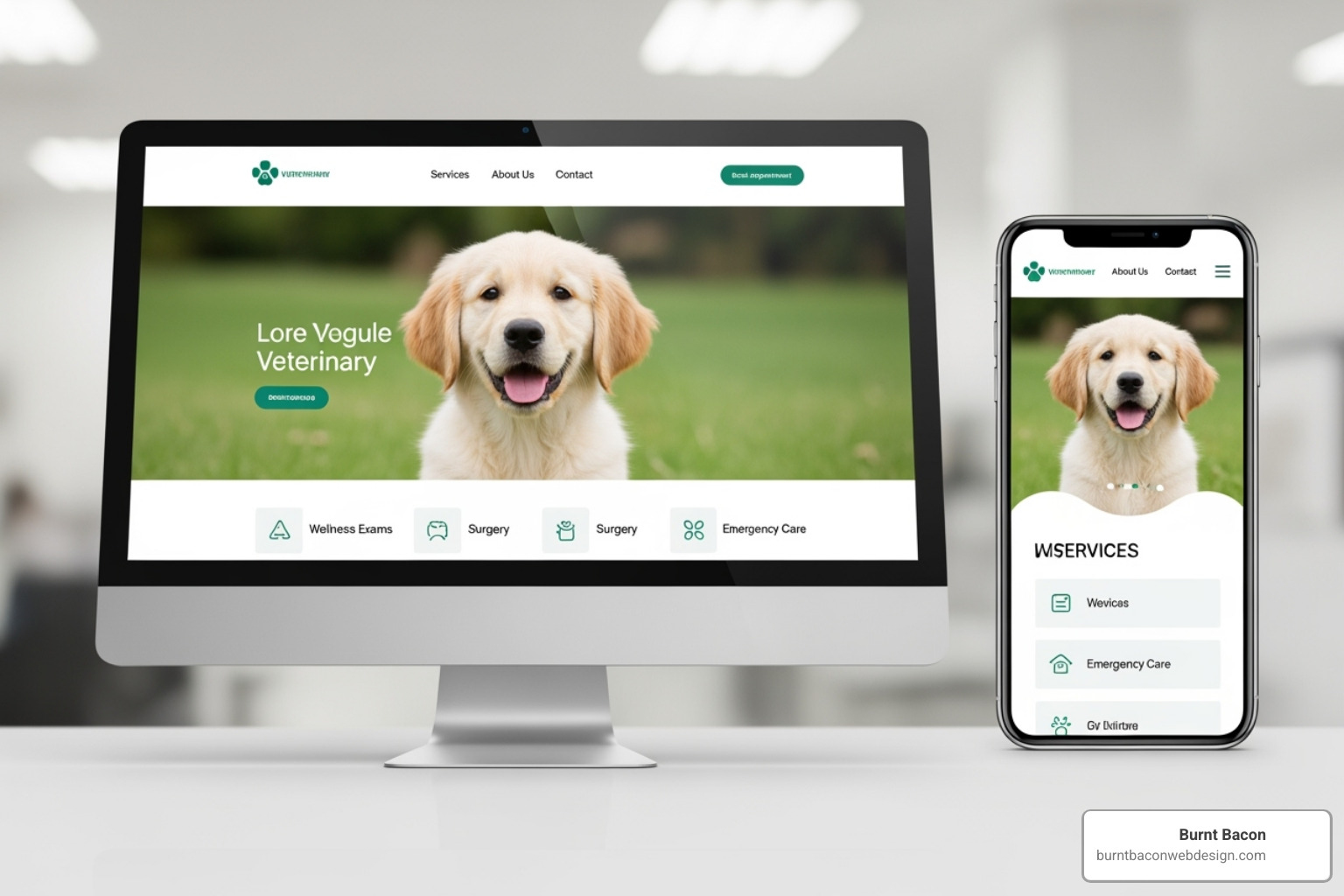
A comprehensive services list helps pet owners understand exactly what you offer, from wellness exams to surgical procedures. And don’t forget your “About Us” or “Meet the Team” page – people want to know who will be caring for their beloved pets. Seeing friendly faces and reading about your team’s qualifications builds that crucial trust factor.
Your website should include these essential pages: Home, Services, About/Meet the Team, Contact, Hours, New Client Information, and Emergency Care. Each page should serve a specific purpose in guiding visitors toward becoming clients.
Mobile-Friendliness and Responsive Design
Here’s a reality check: most people are searching for veterinary services on their phones. They might be at the dog park when they notice something concerning, or lying in bed worrying about their cat. If your website doesn’t work well on mobile, you’re basically telling these potential clients to go somewhere else.
Google knows this too. Their mobile-first indexing means they look at your mobile site first when deciding how to rank you in search results. A website that frustrates mobile users will see high bounce rates – people leaving almost immediately – which signals to Google that your site isn’t helpful.
The statistics are pretty stark: over 60% of people will leave a non-mobile-friendly site and head straight to a competitor. In a competitive market like the Salt Lake City and South Jordan veterinary scene, that’s business you simply can’t afford to lose.
Responsive design ensures your website adapts beautifully to any screen size. Whether someone’s browsing on their laptop at home or frantically searching on their phone, they’ll get the same great experience. For more insights on creating an effective veterinary website, check out our guide on 7 Ways to Optimize Your Veterinary Website Design.
Website Speed and ADA Compliance
Picture this: a pet owner’s dog is having an emergency, and they’re desperately searching for a nearby vet in South Jordan. Your website starts loading… and loading… and loading. Guess what? They’re not waiting around. They’re clicking on your competitor’s fast-loading site instead.
Website speed isn’t just about convenience – it directly impacts whether you get new clients. Slow sites frustrate users and hurt your local search rankings. Google’s Core Web Vitals measure how real users experience your site, including loading speed, interactivity, and visual stability. Sites that score well on these metrics get a boost in search results.
If your website feels sluggish, our Website Speed Optimization Services can help get things running smoothly.
ADA compliance is another crucial foundation element that’s often overlooked. Your website needs to be accessible to everyone, including people with disabilities. This means working with screen readers, allowing keyboard navigation, and using clear, readable fonts and colors.
Beyond being the right thing to do, ADA compliance can protect you from legal issues. Many businesses have faced lawsuits over inaccessible websites. The good news is that accessible websites often perform better for everyone – clear navigation and readable content benefit all your visitors. For guidance on making your site accessible, the ADA compliance checklist is a helpful resource.
Getting these foundational elements right sets the stage for everything else in your veterinary website optimization strategy. When your site is user-friendly, mobile-responsive, fast, and accessible, you’re ready to focus on getting found by the right people – which brings us to SEO.
Boosting Visibility: SEO for Veterinary Practices
So, you have a beautiful, user-friendly website. But how do pet owners find it when they’re searching for a vet in South Jordan or Salt Lake City? That’s where Search Engine Optimization, or SEO, comes in! SEO is the art and science of making your website more visible on search engines like Google. It’s about optimizing your online presence so that when pet owners in the Salt Lake Valley look for services like yours, your practice shows up right at the top.
Why is this so vital for your veterinary practice? Simply put, visibility equals clients. Most people searching online don’t click past the first few results. In fact, if you’re ranked first, you could see nearly 40% of all clicks! That number drops sharply for the second and third positions. This direct link between your search ranking and the number of people who visit your site makes SEO a non-negotiable part of your digital strategy.
Google uses many factors to decide who ranks where. They look at the relevance and quality of your content, how fast your website loads, how easy it is for people to use, and how much authority your site has. By focusing on these areas, you can significantly improve your ranking and attract more organic traffic – those valuable visitors who find your site naturally through a search. This is where a strong veterinary website optimization strategy truly shines. If you’re curious about how we can help boost your rankings, take a look at our insights on Google Ranking Improvement.
SEO for veterinary practices works across three main areas:
- On-Page SEO focuses on optimizing the content and structure directly on your website.
- Off-Page SEO builds your website’s authority and trust through external signals.
- Technical SEO ensures your website’s underlying code and structure are healthy for search engines.
Let’s explore what each of these means for your practice.
Key On-Page Elements for Veterinary Website Optimization
On-Page SEO is all about what’s on your website. It’s making sure every page clearly tells Google and pet owners what it’s about. A crucial first step is keyword research. This means finding out what words and phrases pet owners are actually typing into Google when they look for veterinary services. Are they searching for “vet near me,” “dog teeth cleaning South Jordan,” or “emergency animal hospital Salt Lake City”? Understanding their search intent helps you create content that directly answers their questions.
Once you know your keywords, you’ll want to sprinkle them naturally throughout your site. This includes your meta titles (the clickable headline in search results) and meta descriptions (the short summary below the title), which entice users to click. Your header tags (H1, H2, H3, etc.) help organize your content, making it easy for both people and search engines to understand your page’s structure. Think of them as chapter headings in a book.
Even your URL structure matters – clear, readable URLs are better. Don’t forget image optimization! When you upload photos of your adorable patients or your friendly team, make sure they are properly sized and include alt text (a brief description of the image). This helps search engines understand your images and makes your site more accessible. These seemingly small details add up to a big difference in how well your site performs in search results. Want to learn more about how keywords drive traffic? Check out Website Traffic and Sales: What Affects Organic Keyword Search?.
Building Authority with Off-Page SEO
While On-Page SEO makes your site internally strong, Off-Page SEO builds your website’s reputation and authority across the internet. Think of it like word-of-mouth for your website. When other reputable websites link to yours, these are called backlinks, and they act as votes of confidence in Google’s eyes. The more high-quality backlinks you have, the more trustworthy your site appears.
Your online reputation is also a huge part of Off-Page SEO. This includes online reviews and testimonials from happy clients on platforms like Google, Yelp, and Facebook. Encouraging and responding to reviews not only builds trust with potential clients but also signals to Google that your practice is active and valued. Sharing engaging content on social media and participating in community engagement (like local pet events or charities in the Salt Lake area) also sends positive signals to search engines about your practice’s relevance and trustworthiness. Building this external authority is key to long-term success in veterinary website optimization. For more on building positive reviews and optimizing your site, explore 7 Ways to Optimize Your Veterinary Website Design.