

Why Google Rankings Matter for Your Business Success
Google ranking improvement is the process of optimizing your website to appear higher in search results, driving more organic traffic and qualified leads. If you’re a Utah business owner watching competitors dominate search results, you’re not alone. Since 44% of shoppers start with a Google search, invisible businesses lose customers daily.
The good news is that climbing the rankings is achievable. It hinges on understanding core factors like content quality, technical SEO, backlinks, user experience, and local optimization. While initial changes can appear in weeks, significant improvements take 4-6 months of consistent effort.
For over 10 years, my team at Burnt Bacon Web Design has helped Utah businesses achieve Google ranking improvement through strategic SEO and web design. We focus on what actually moves the needle in search results to deliver year-over-year growth.
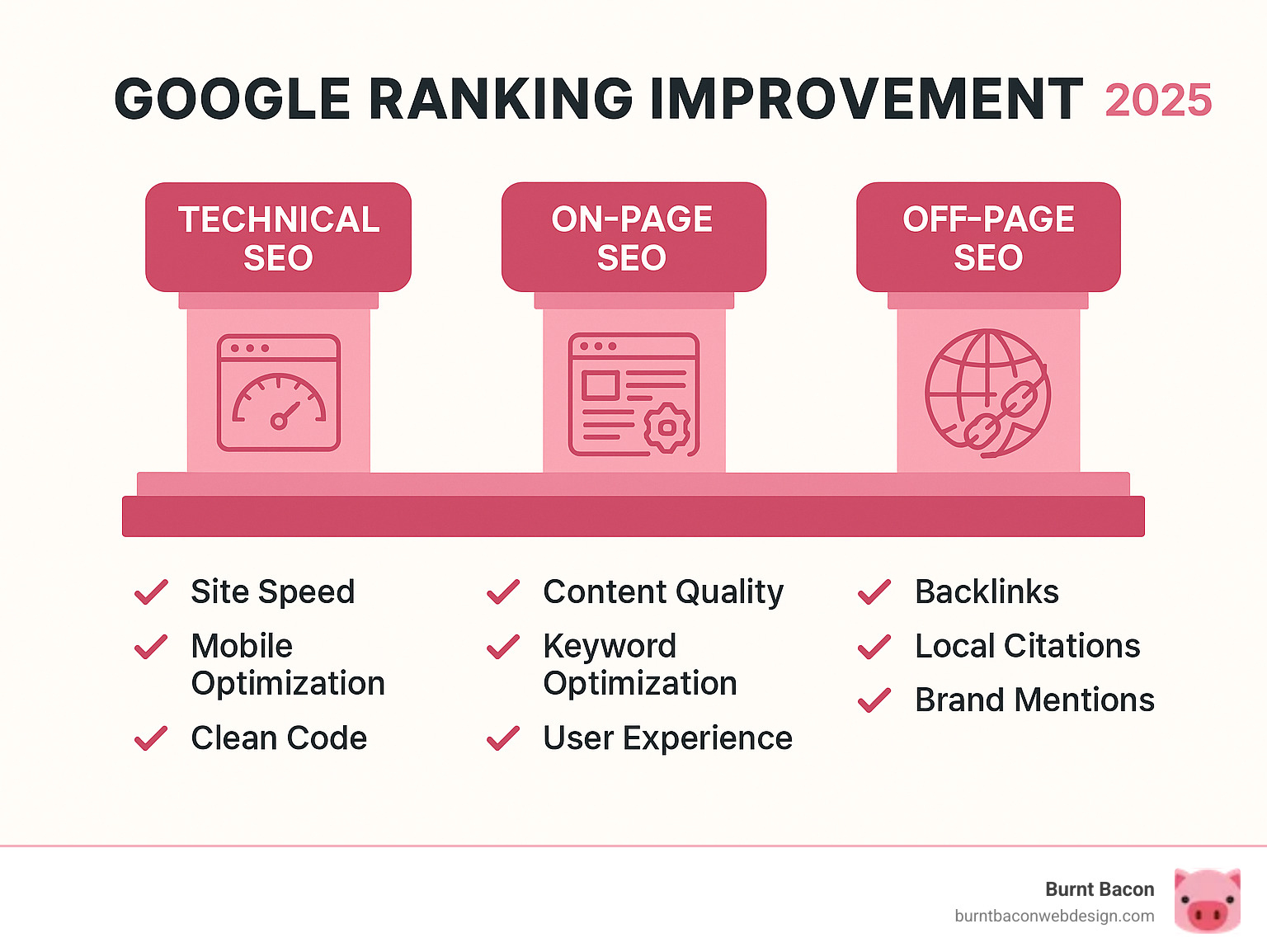
Important Google ranking improvement terms:
Understanding Google’s Ranking Engine for the Utah Market
Think of Google as a digital librarian for the Salt Lake Valley, organizing billions of web pages to match each search query with the perfect local answer. This process is driven by sophisticated algorithms that evaluate websites on hundreds of factors. You don’t need to know them all; you just need to focus on what matters most for Google ranking improvement in Utah.
Google’s mission is to organize the world’s information and make it useful. This is the key to ranking better: give Utah users what they’re looking for. A huge part of this is mobile-first indexing. Google now looks at your website’s mobile version first, so if your Utah business site looks terrible on a phone, you’re invisible to most potential customers in Salt Lake City and South Jordan. Higher rankings mean more visibility, which leads to more website traffic and sales.
What Are Core Ranking Factors for Utah Businesses?
While Google uses over 200 ranking factors, focusing on these will give you the biggest impact in the local market:
- Content quality: Google’s algorithms recognize genuinely helpful content. It’s not about word count; it’s about thoroughly answering the questions your Salt Lake City audience has.
- Backlinks: These are votes of confidence from other websites. One quality link from a respected Utah publication is worth more than dozens of irrelevant links.
- Mobile-friendliness: With so many Utahns searching on the go—whether they’re in downtown SLC or near The District in South Jordan—a poor mobile experience will torpedo your rankings.
- Page speed: Slow sites frustrate users, especially in the tech-savvy Wasatch Front. Google’s Core Web Vitals include loading speed as a key metric.
- User signals: Metrics like click-through rate and dwell time show Google if people in Utah find your content engaging.
- E-E-A-T: This framework (Experience, Expertise, Authoritativeness, Trust) is increasingly important. Google wants to see that real experts in the Utah community are behind the content.
The Importance of Local Search Intent
Many Utah businesses focus on keywords but forget the person behind the search. Understanding search intent—the why behind a query—is crucial for connecting with local customers.
- Informational: The user wants to learn something (e.g., “best hiking trails near Salt Lake City”).
- Navigational: The user knows where they want to go (e.g., “Burnt Bacon Web Design South Jordan”).
- Commercial: The user is researching options before a decision (e.g., “best home builders in Daybreak”).
- Transactional: The user is ready to act now (e.g., “hire SEO company in Salt Lake City”).
The magic happens when you align your content with what local users want. If someone in South Jordan searches for “landscaping services near me,” they want local providers, not a blog post about gardening in California. Studying top-ranking pages for your target keywords reveals what Google thinks best satisfies each search. This insight is gold for Google ranking improvement because it ensures you’re creating the right content for the Utah market.
Mastering On-Page and Off-Page SEO for Salt Lake City Businesses
Think of Google ranking improvement like building a business in Utah. On-Page SEO is like ensuring your South Jordan storefront is clean, well-organized, and inviting. Off-Page SEO is your reputation throughout the Salt Lake Valley—the word-of-mouth and local press that says you’re the best. You need both to succeed.
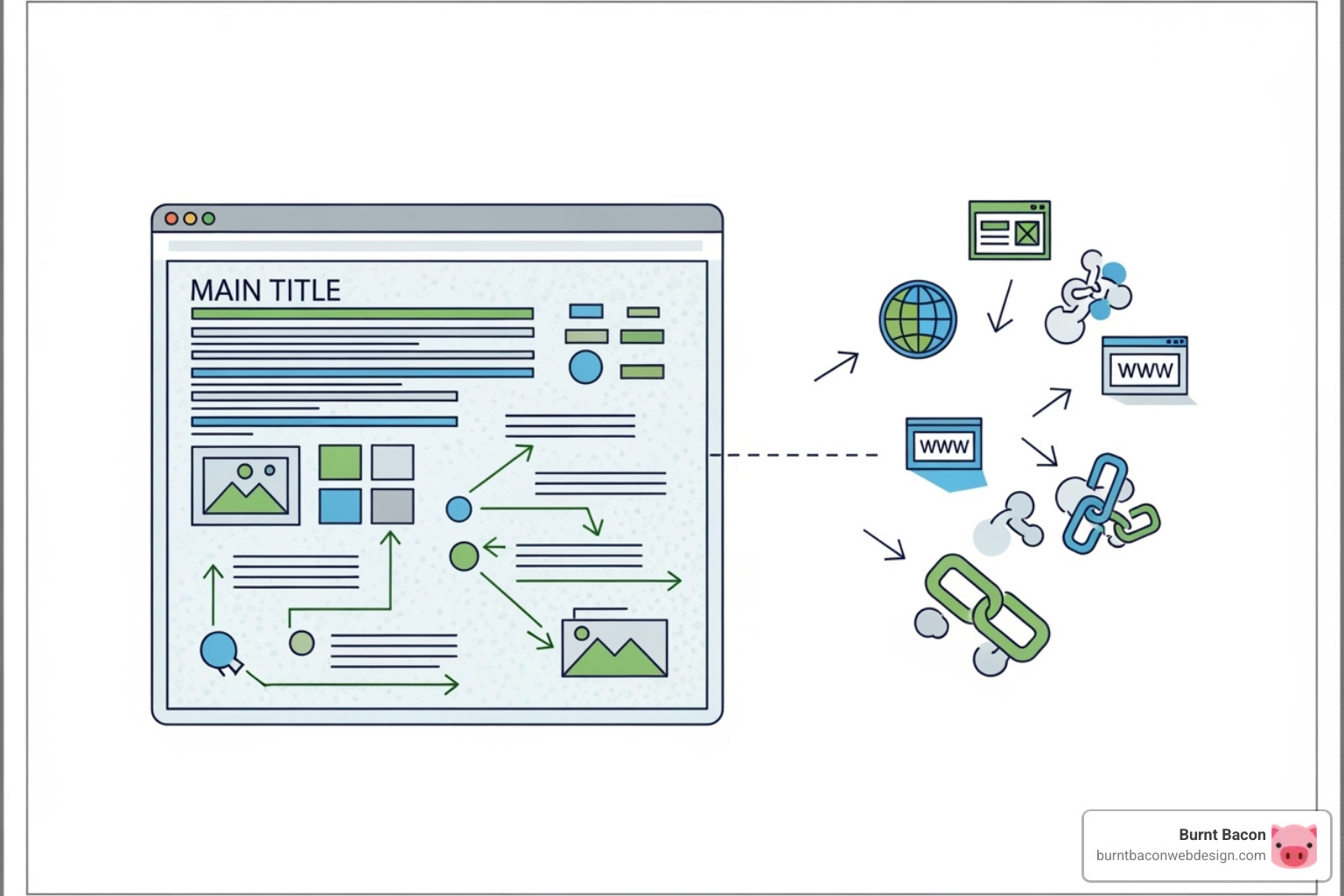
On-Page SEO covers optimizations on your website, while Off-Page SEO builds authority through external signals. You can’t have one without the other. A site with great content but no external validation will struggle, just as a site with many backlinks but poor content won’t satisfy users. For more, see our guide on Off-Page SEO.
The Role of Content Quality in Google Ranking Improvement
Your content is the foundation. Without genuinely helpful content for Utahns, technical tricks won’t save you. Focus on creating value for real people in our community, not just search engines. Keyword research is your compass, but you must understand the intent behind local searches. Your content must be readable and comprehensive, addressing the unique questions of your Salt Lake City and South Jordan customers. The E-E-A-T framework is crucial for credibility. Also, regularly updating old content keeps it relevant and rewarded by Google. Effective content types for Google ranking improvement include:
- Blogs that answer common questions for Utah residents.
- Guides that walk users through processes relevant to our area.
- Case studies that demonstrate real results for local businesses.
Technical SEO Best Practices for Google Ranking Improvement
Technical SEO ensures Google can crawl and understand your site. It’s the plumbing of your digital home.
- Site speed: Non-negotiable. Aim for load times under two seconds to meet the expectations of users in the Silicon Slopes. Check your site speed with PageSpeed Insights. For tips, see our guide on How to Speed Up My Site (2024 Update).
- Mobile responsiveness: Your site must work beautifully on all devices, from a desktop in an office in Lehi to a smartphone in a cafe in Sugar House.
- Clean URL structure: Use clear, descriptive URLs like
yoursite.com/south-jordan-family-dentist. - Image optimization: Compress images and use descriptive filenames and alt text for SEO and accessibility.
- Internal linking: Create pathways through your site to help users and Google find content.
Building Authority with Quality Backlinks
Link building signals to Google that your Utah site deserves to rank. Quality backlinks act as recommendations.
- Domain authority: Grows as you earn high-quality backlinks. Quality trumps quantity.
- Guest posting: Share your expertise on relevant Utah industry blogs or news sites like KSL.com to earn valuable backlinks and establish your reputation in the local market.
- Broken link building: Find broken links on other Utah sites, create a replacement resource, and suggest it to the site owner.
- Natural links: The best links are earned organically when other Utah businesses or organizations reference your exceptional content.
- Avoiding toxic links: Links from spammy or irrelevant sites can hurt your rankings. Regular backlink audits are essential. Our competitive SEO analysis can reveal how you stack up against local competitors in Salt Lake City and South Jordan.
Dominating Local Search in Salt Lake City
For a Utah business, local search is critical. When someone in Salt Lake City searches for “Italian restaurant near me,” Google’s focus shifts to showing nearby businesses. This is where Google ranking improvement gets exciting for local companies.
Think about your own search habits. You look at the first few local results, check reviews, and call the most trustworthy one. Your customers do the same. Google uses three factors for local rankings: relevance, distance, and prominence (reputation). You can’t pay for better local rankings; it’s about providing accurate information and building local credibility. A small South Jordan restaurant can outrank a big chain with the right local SEO. For more, see our guide on Local SEO in Salt Lake City.
Optimizing Your Google Business Profile (GBP)
Your Google Business Profile is your digital storefront. Getting it right is crucial.
- Complete information: Fill out every field: name, address, phone, website, hours, and categories. If Google doesn’t have complete info, it can’t confidently recommend you.
- Business categories: Be specific. If you’re a web designer, choose “Web Design Company,” not just “Marketing Agency.”
- High-quality photos: Businesses with photos get more clicks. Show your storefront, team, and products.
- Responding to reviews: Respond to all reviews, positive and negative, to show you care about customer experience.
- Google Posts: Keep your profile fresh with updates, offers, or news. You can manage your Google Business Profile directly. For more tips, see how to Boost Your Local Reach.
Local Ranking Signals for Utah Businesses
Beyond your GBP, other factors influence local rankings.
- NAP consistency: Your Name, Address, and Phone number must be identical everywhere online. Inconsistencies confuse Google.
- Local keywords: Use local terms naturally in your content, like “web design near Temple Square.”
- Utah-based directories: Get listed in Utah-specific directories and chamber of commerce sites to signal local relevance.
- Community engagement: Sponsoring local teams or events can earn local mentions, links, and reviews, building the prominence Google values.
Local Google ranking improvement takes time, but the results can transform your business. We can help you track your local performance to ensure your efforts pay off.
Advanced Tactics for the Utah Market: Schema, UX, and Future-Proofing
Once you’ve mastered the basics, advanced strategies can provide a competitive edge for your Google ranking improvement efforts in the Salt Lake City area. These tactics focus on helping Google better understand your content through schema markup and creating an exceptional user experience (UX) that keeps local visitors engaged.

Enhancing Visibility with Schema Markup
Schema markup is code you add to your website that acts as a translator for search engines. It helps Google understand your business in a local context, which is vital for standing out in a competitive market like Salt Lake City. While it doesn’t directly boost rankings, it can improve visibility through rich snippets—eye-catching search results with extra info like star ratings or prices.
- FAQ schema: A South Jordan dental practice could use this to answer common questions about teeth whitening, appearing directly in search results.
- Local business schema: Essential for any Utah business, this markup clarifies your South Jordan address, hours, and reviews, making your GBP more robust for local searches.
- Product schema: Displays prices, availability, and review ratings for e-commerce sites targeting Utah customers.
- How-to schema: Presents step-by-step instructions directly in search results.
You can learn more at Schema.org markup and use Google’s Rich Result tester tool to check your implementation.
How User Experience (UX) Impacts Rankings
Google’s algorithms are getting better at measuring user satisfaction, and these signals are critical for Google ranking improvement in the Wasatch Front.
- Dwell time and bounce rate: If a user from Salt Lake City clicks your result and stays for several minutes (long dwell time), it’s a strong positive signal. If they leave immediately (high bounce rate), it’s a negative one.
- Site navigation: Easy navigation encourages visitors to explore more pages, increasing time on site.
- Readability and page layout: Content should be easy to read, with clear headings, white space, and a logical flow.
- Core Web Vitals: These official ranking factors measure page speed, responsiveness, and visual stability. A slow or clunky site will struggle to rank against your tech-savvy competitors in the Silicon Slopes.
Focusing on UX creates a positive cycle: better user signals lead to higher rankings. For more on this, see how to Open up Higher Conversions with CRO. Also, consider voice search optimization by targeting natural, conversational queries that Utahns might ask, like, “Hey Google, find a web designer near Daybreak.”
Frequently Asked Questions about Google Rankings for Utah Businesses
As a Utah-based agency with a decade of experience, we hear the same questions about Google ranking improvement often. Here are the answers that matter most to business owners in Salt Lake City and South Jordan.
What’s the difference between SEO and SEM?
Imagine you’re a new restaurant in South Jordan’s ‘The District’. SEO (Search Engine Optimization) is building a great reputation through local food blogger reviews and word-of-mouth so people find you naturally. SEM (Search Engine Marketing) is a broader term that includes SEO plus paid strategies, like running Google Ads that target diners in specific Salt Lake County zip codes. Many Utah businesses find success by combining both.
How long does it take to see Google ranking improvement?
This is the most common question. The honest answer is that Google ranking improvement is a marathon, not a sprint. While you might see minor gains in a few weeks, meaningful and stable ranking improvements typically take 4 to 6 months of consistent effort. For new sites or highly competitive keywords (like “web design Salt Lake City”), it can take a year or more. For a less competitive local service in South Jordan, you might see results faster. Google needs time to evaluate your site, build trust, and see how users interact with it.
What are the most common reasons for low Google rankings?
After analyzing hundreds of Utah business websites, we’ve seen recurring issues that hold sites back. The most common are:
- Poor content quality: Content that doesn’t address the specific needs or questions of your Utah customers.
- Technical issues: Slow loading speeds on a mobile device in downtown SLC, or a site that’s not mobile-friendly.
- Lack of quality backlinks: Without links from other reputable Utah sites (like local news, business directories, or community partners), Google struggles to gauge your authority.
- High competition: Some industries in the Wasatch Front, from tech in Lehi to real estate in Salt Lake City, require more intensive SEO efforts.
- Outdated content: Google rewards fresh, current information, especially for local events or services.
- Algorithm updates: Google’s frequent updates can sometimes cause ranking fluctuations.
The good news is that every one of these issues is fixable with the right approach to Google ranking improvement.
Take Your Rankings to the Next Level
Achieving meaningful Google ranking improvement is a marathon, not a sprint. The businesses that win are those that commit to a long-term strategy of delivering value.
Here’s the bottom line: put your users first. Create helpful content, ensure your site is fast and mobile-friendly, and build authority by being a genuinely useful resource. Understand the intent behind keywords, not just the words themselves. For Utah businesses, local optimization is a game-changer that connects you with customers in Salt Lake City and beyond.
SEO isn’t a one-time task. It requires continuous improvement as algorithms evolve and competitors adapt. At Burnt Bacon Web Design, we’ve spent 10 years helping Utah businesses steer these challenges, turning websites into powerful lead-generation machines.
Our approach combines technical expertise with real-world business sense. We optimize for your customers and your goals, whether you’re a local shop in South Jordan or a company serving all of Utah.
Ready to see what’s holding your website back?
- Get a free video audit from our dedicated SEO team to uncover hidden opportunities.
- Partner with our Local SEO Salt Lake City experts to start ranking higher in the searches that matter most.
Let’s work together to make your website the go-to resource in your industry and grow your Utah business.