

Why Your Utah eCommerce Business Needs a Battle Plan
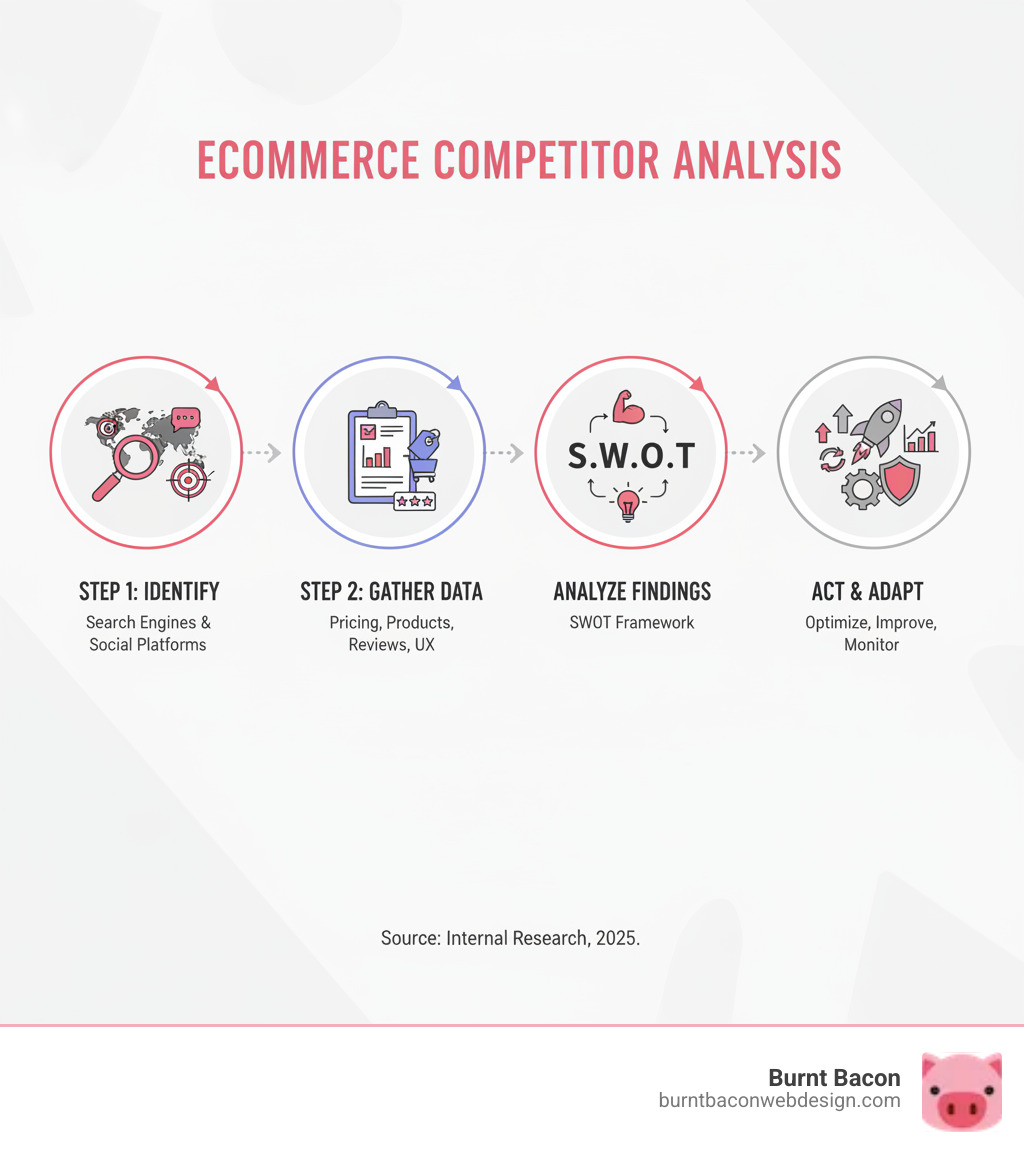
Competitor analysis ecommerce is the process of researching your business rivals to understand their strengths, weaknesses, and strategies—then using those insights to refine your own approach. Here’s how to do it effectively:
- Identify Your Competitors – Find direct, indirect, and tertiary rivals through Google searches, social media, and marketplace platforms.
- Gather Key Data – Collect information on pricing, products, marketing channels, customer reviews, and website functionality.
- Analyze with Frameworks – Use SWOT analysis and competitive intelligence tools to spot patterns and opportunities.
- Take Action – Apply insights to optimize your pricing, marketing, UX, and product offerings.
- Monitor Regularly – Update your analysis quarterly and stay alert to market shifts.
Ecommerce is booming, which means competition is fierce. If you’re running an online store from South Jordan or Salt Lake City, you’re not just competing locally; you’re up against businesses from Park City to St. George and national brands with massive budgets.
The reality is that 90% of Fortune 500 companies use competitive intelligence to stay ahead. They study their rivals to make smarter decisions—and so can you.
A solid competitor analysis ecommerce strategy helps you understand the market, spot gaps, and find your unique edge. It’s not about copying; it’s about learning what makes customers choose you.
This guide walks you through the exact steps: how to identify competitors, what data to collect, which tools to use, and how to turn research into action that grows your sales.
I’m Craig Flickinger, founder of Burnt Bacon Web Design. For over a decade, I’ve helped Utah businesses build smarter strategies with competitor analysis ecommerce and data-driven SEO. Let’s get started.
Competitor analysis ecommerce terms to know:
Step 1: Identifying Competitors and Gathering Intelligence
Before you can outsmart your competition, you need to know who they are. This first step in competitor analysis ecommerce is about identifying who’s competing for your customers’ dollars and gathering intelligence on how they operate.
Your competitors’ websites are open books. Visiting them shows you exactly what your shared customers see, offering valuable lessons. Start by examining their website functionality. How easy is it to find products? Does the site load quickly on mobile? Is checkout smooth? These details matter. Since 59% of US consumers abandon a brand after several bad experiences, a competitor’s frustrating checkout is your opportunity to win customers with a better one.
Look at their user experience (UX) from a customer’s perspective. Do they use video to showcase products? Is there live chat support? How do they handle product images? If a competitor in Park City is using interactive 360-degree product views, that sets a benchmark you’ll want to consider.
Dig into their product assortment—what they sell, how they categorize it, and what seems popular. Check their content marketing, too. Are they publishing helpful blog posts or guides? This reveals how they’re building trust beyond just selling products.
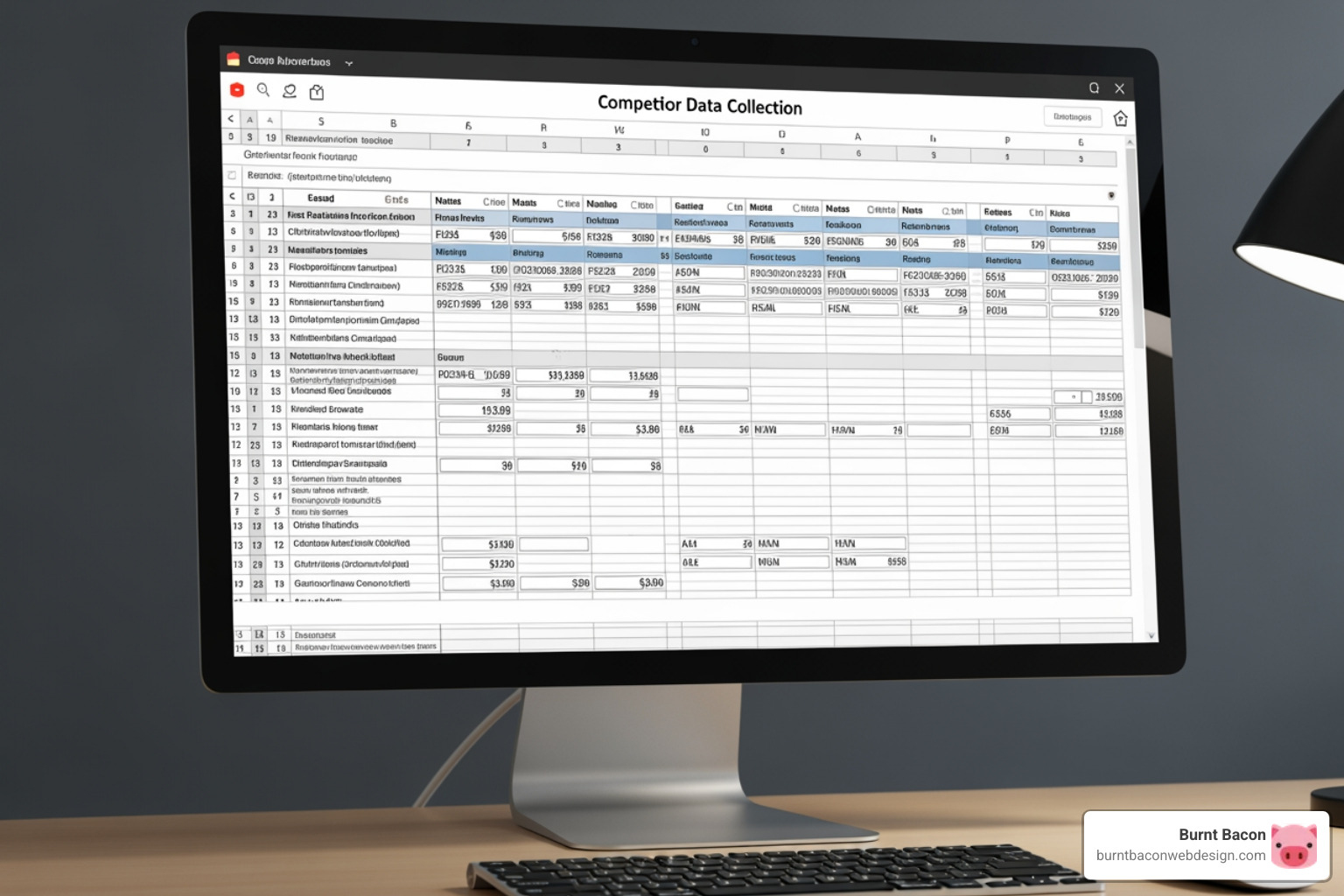
The goal isn’t to copy your rivals. It’s to understand the playing field so you can find where your business fits—and where you can do better.
For more insights into creating an effective online presence, check out more info about Ecommerce Web Design Utah.
How to find your direct, indirect, and tertiary competitors
Not all competitors are equal. Let’s break down the three types you need to identify:
- Direct competitors sell similar products to the same audience. If you run an online outdoor gear shop in Salt Lake City, other online retailers targeting Utah customers are direct competitors.
- Indirect competitors solve the same customer problem differently. For an outdoor gear shop in South Jordan, a big-box sporting goods store in The District selling general winter apparel might be an indirect competitor.
- Tertiary competitors serve a similar audience with different offerings. For an online women’s boutique based in Utah, a popular salon in Salt Lake City’s 9th and 9th neighborhood could be a tertiary competitor—both appeal to a similar demographic interested in style and self-care.
How do you find them?
- Start with Google. Search for your main products using terms your customers would use, including local phrases like “handmade jewelry Salt Lake City.” See who ranks organically.
- Listen on social media. Check relevant hashtags and groups on Instagram, Facebook, and TikTok to see which brands are engaging your target audience.
- Browse marketplace platforms. If you sell on Amazon or Etsy, explore those sites to see who offers comparable products.
Cast a wide net, then narrow your focus to the 3-5 most relevant competitors to monitor regularly.
For a deeper dive into this process, check out a guide to identifying your competitors. And if you’re looking to boost your visibility in the Utah market, see more info about Local SEO Salt Lake City.
Key data points to collect for your ecommerce competitor analysis
Once you know who your competitors are, it’s time to get specific. Systematic data collection reveals their strategy and your opportunities.
- Product Offerings: Note the breadth and depth of their catalog, new product frequency, and presentation (images, video). How do they communicate unique value?
- Pricing Strategies: Note their base prices for similar products. Do they run frequent promotions, offer loyalty programs, or use seasonal pricing? This helps you position your own products competitively.
- Shipping Costs and Policies: This can make or break a sale. 35% of ecommerce shoppers say delivery cost is the number one feature they look for. Check competitors’ free shipping thresholds, delivery speeds, and return policies. Also, 43% of consumers will pay more for convenience like faster shipping.
- Customer Reviews and Feedback: Read reviews on their site, third-party sites, and social media to spot common themes. Are people raving about product quality but complaining about slow shipping? This is gold for understanding customer expectations.
- Marketing Channels and Content Strategy: Which platforms drive the most engagement? What type of content do they produce, and what is their brand voice? This shows where they’re investing their energy.
- Website Functionality and UX: Test their site on mobile and desktop. How’s the navigation? How many steps in their checkout? Do they offer guest checkout? Small details here have big impacts on conversion rates.
- Additional Services: Do they offer gift wrapping, personalization, or financing? Are they running an omnichannel strategy? 71% of consumers are willing to pay a premium for brands that provide full product traceability, a growing trend to watch.
By collecting these data points, you build a complete picture of how your competitors operate, creating a benchmark for your own business.
Step 2: Analyzing the Data with the Right Tools and Frameworks
You’ve gathered data about your competitors. Now what? Raw data is useless without analysis. The goal of competitor analysis ecommerce is to spot patterns, uncover opportunities, and figure out exactly where you can win.
Think of it as building a map of the Utah market. Where are your rivals strong? Where are they vulnerable? And most importantly—where’s the opening for your Salt Lake City or South Jordan business?
Powerful tools can make this process faster and smarter. Combined with frameworks like SWOT analysis, you can turn raw information into a clear action plan.
For a deeper look at how competitive intelligence can sharpen your search strategy, check out More info about Competitive SEO Analysis.
Essential tools for a competitor analysis ecommerce
The right software can save you hours and reveal insights you’d never spot on your own.
- For SEO and keyword research: SEMrush and Ahrefs show you which keywords competitors rank for, where they get backlinks, and how they perform in search. SpyFu reveals their paid ad keywords. Free options like Google Ads Keyword Planner and Google Trends are also powerful for understanding local Utah search behavior.
- For social media monitoring: RivalIQ and Sprout Social help you track competitor posts, engagement, and audience response. Social Searcher or Brandwatch can monitor brand mentions and sentiment.
- For website technology insights: BuiltWith and Wappalyzer reveal a competitor’s ecommerce platform (e.g., Shopify, WooCommerce), marketing tools, and payment processors, showing where they invest their tech budget.
- For traffic analysis: Similarweb estimates competitor traffic volume and sources (search, social, direct), helping you understand their market reach.
- For email marketing: Owletter and MailCharts let you track competitors’ email campaigns, including frequency and promotions.
- For content performance: BuzzSumo shows you the most-shared articles and posts in your industry, revealing what topics resonate.
Start with a few tools that match your needs and budget. Even a basic combination can give you a solid competitive edge.
If you’re looking to strengthen your backlink profile and off-page SEO, visit More info about Link Building Strategy Utah.
Using a SWOT analysis to find your unique edge
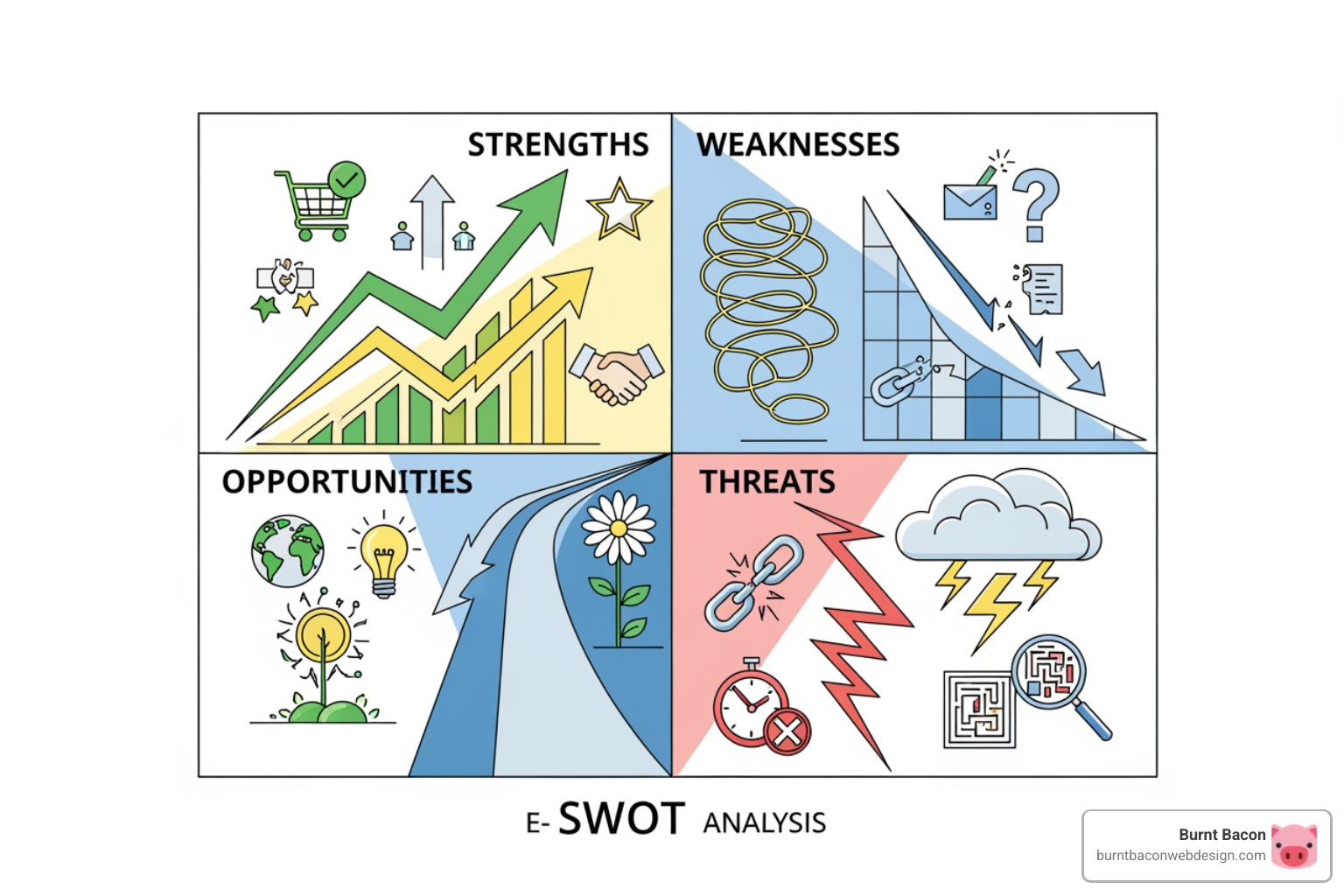
Once you’ve collected your data, it’s time to make sense of it. SWOT analysis is a simple but powerful framework for competitor analysis ecommerce.
SWOT stands for Strengths, Weaknesses, Opportunities, and Threats.
- Strengths are what your competitors do well (e.g., huge product selection, fast shipping, strong local reputation in the Utah market).
- Weaknesses are where they fall short (e.g., clunky website, slow customer service, poor mobile experience). These are your opportunities.
- Opportunities are external factors you can leverage (e.g., a growing trend they’ve missed, a new social platform, or an unmet customer need like same-day delivery in Salt Lake City).
- Threats are external factors that could hurt your business (e.g., new competitors, economic shifts, aggressive pricing from national brands).
When you map out your competitors’ SWOT profile alongside your own, patterns emerge. You start to see where your strengths align with their weaknesses. This is where you find your Unique Selling Proposition (USP)—the reason customers should choose you.
For example, if a national retailer has slow shipping to rural parts of Utah, a business based in South Jordan offering fast local delivery across the Salt Lake Valley has a real advantage. It’s not about a bigger budget; it’s about being smarter.
The goal is to learn from their successes, avoid their mistakes, and carve out your own unique position in the market.
For a detailed guide on conducting competitive analysis, check out A guide on how to make competitive analysis.
Step 3: From Analysis to Action: Building Your Winning Strategy
Insights from competitor analysis ecommerce are useless without action. This step is about turning your research into real improvements that drive sales and growth for your Utah business. You’ve studied the playbooks; now it’s time to write your own.
The stakes are high. The top Google result gets an average click-through rate of 31.7%, while only 0.78% of searchers click on the second page. If you’re not on page one, you’re practically invisible. Applying your competitive insights to climb the rankings is crucial.
Your analysis should inform every major decision. When a competitor’s product page converts well, what are they doing differently? When their shipping policy wins customers, how can you beat it? When they dominate certain keywords, what’s your plan to compete?
You’re not starting from scratch. You’re building on what already works in your market and adding your own twist—whether that’s better service, faster shipping across Utah, or unique products.
Let’s break down how to turn research into results.
To ensure your website is converting those hard-earned clicks, dig into More info about Unlock Higher Conversions: Best Practices for CRO Success.
Optimizing your pricing and marketing strategies
Your competitor analysis ecommerce research is packed with intelligence. Time to put it to work.
Getting Your Pricing Right
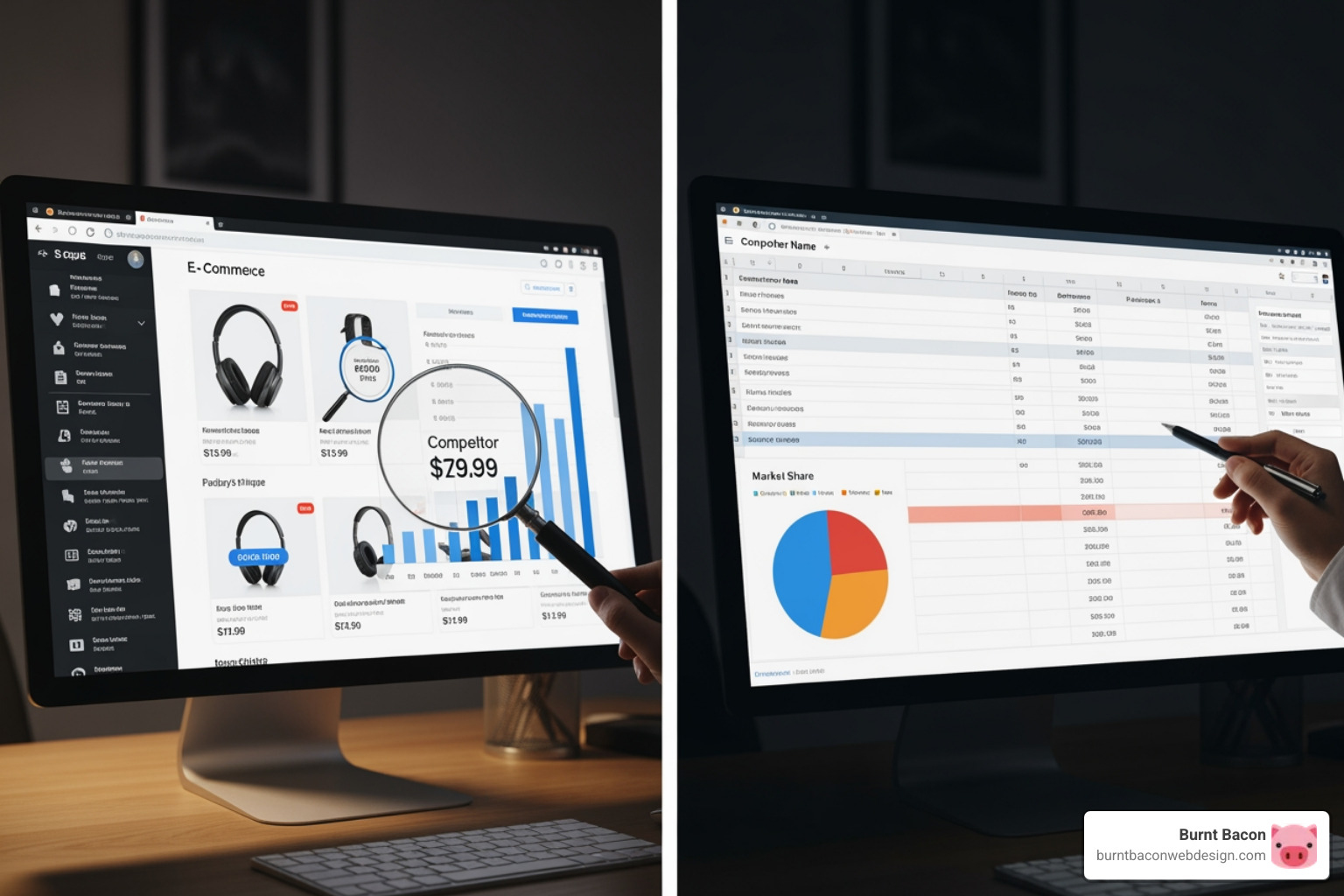
Pricing is about market positioning, not just being the cheapest. Your analysis might reveal a gap in the Utah outdoor gear market, like a sweet spot for quality, mid-range products. Perceived value matters more than price. If you offer free shipping, personalized service, or unique local products, customers will often pay more. They just need to understand why.
Watch how competitors run promotions. Are they doing flash sales, bundle deals, or loyalty programs? These tactics provide a roadmap for your own strategy, but be careful not to devalue your brand by discounting too aggressively.
Sharpening Your Marketing
Your keyword research reveals where you’re missing opportunities. When you spot keywords your competitors rank for that you don’t, that’s your to-do list. For Utah businesses, this often means targeting hyper-local terms like ‘ski tuning South Jordan’ or ’boutique dresses Salt Lake City’ that attract ready-to-buy customers.
Content marketing is easier when you know what’s already working. If competitors get engagement on posts about “best camping gear for Utah winters,” create something even better—your own take that adds more value or a fresh angle.
Social media insights show you which platforms and content types drive engagement. Learn from your rivals’ successes and failures to focus your energy and budget effectively.
For a comprehensive guide on improving your search engine presence, read our More info about SEO Best Practices.
Enhancing website functionality and user experience
Your website is your store. If it’s confusing or slow, people will leave. Data shows 59% of US consumers will abandon a brand after several bad experiences, so you have few chances to get your site’s UX right. Use your competitor analysis ecommerce findings as a roadmap for improvement.
- Checkout Process: Go through your competitors’ checkout flows. Count the steps. Do they offer guest checkout? If their process is smoother than yours, that’s a problem to fix. Every extra click costs you sales.
- Mobile Experience: Test competitors’ sites on your phone. Is their mobile site fast and easy to use? If they’re doing mobile better, that’s actionable intelligence.
- Page Speed: A one-second delay kills conversions. Use tools like Google PageSpeed Insights to see how you stack up. If competitors are faster, you need to catch up.
- Navigation: Study how competitors organize their products and categories. If customers can find what they need in seconds on a rival’s site but get lost on yours, you’re handing them sales.
- Customer Service Features: Live chat, detailed FAQs, and easy-to-find contact info build trust. See what competitors offer and find opportunities to level up. For businesses in Salt Lake City or South Jordan, offering personal service and true local expertise can be a secret weapon against national brands.
The goal is to learn from what works, fix what doesn’t, and create an experience that makes customers choose you.
For more on making your site lightning-fast, visit More info about Website Speed Optimization Services.
Frequently Asked Questions about eCommerce Competitor Analysis
When we work with Utah businesses—from Salt Lake City to South Jordan—these are the questions that come up most often about competitor analysis ecommerce. Let’s tackle them.
What are the key components to analyze in an e-commerce competitor?
Think of competitor analysis ecommerce as breaking down a recipe. We look at six main areas to get a complete picture:
- Product: Catalog breadth, product presentation (images, video, descriptions), and unique selling points.
- Price: Base prices, promotional tactics, loyalty programs, and shipping costs. 35% of shoppers rank delivery cost as their top concern.
- Placement: All the channels where they sell, from their own website to Amazon, Etsy, and even local Utah pop-up events.
- Promotion: Their marketing strategy, including SEO, social media presence, email campaigns, and content marketing.
- Website UX: How easy their site is to steer, how fast it loads (especially on mobile), and the smoothness of the checkout process.
- Customer Service: How they support buyers, including live chat, FAQs, response times, and return policies. Reviews often reveal the true service experience.
How often should I conduct a competitor analysis?
Competitor analysis ecommerce is not a one-time task. Markets change constantly. Think of it like checking your mirrors while driving.
We recommend a simple rhythm:
- Quarterly Deep Dives: A thorough review of your top competitors across all key components. This catches major strategic shifts.
- Monthly Quick Checks: A 20-minute review of your 3-5 closest rivals. Check their social media, new products, and any big promotions.
- Immediate Action Triggers: Stay alert for market shifts that require an instant response. If a competitor opens a Utah warehouse for faster shipping or launches a product that rivals your bestseller, you need to analyze the impact right away.
Regular monitoring means you’re adapting proactively instead of reacting when it’s too late.
What is the difference between direct and indirect competitors?
This is a crucial distinction in competitor analysis ecommerce.
Direct competitors sell the same products to the same audience. They are fighting for the exact same customer. If you sell handcrafted leather goods online in Salt Lake City, another online leather goods shop targeting Utah is a direct competitor.
Indirect competitors solve the same customer problem but with a different solution. They might not look like competitors at first. For example, if you sell custom skis in Park City, a snowboard rental service is an indirect competitor. Both serve winter sports enthusiasts enjoying Utah’s slopes, but they compete for the same customer’s budget with different offerings (ownership vs. temporary access).
Understanding both types is vital. Indirect competitors can steal customers in unexpected ways, so analyzing them gives you a complete picture of the competitive landscape in the Utah market.
Conclusion: Stay Ahead of the Competition
Running an online store from Salt Lake City or South Jordan, Utah, means competing in a dynamic market. Your rivals aren’t just down the street—they’re everywhere, constantly evolving.
We’ve covered the essentials: Competitor analysis ecommerce is an ongoing process. It involves identifying rivals, gathering key data (pricing, products, marketing, UX), and using frameworks like SWOT to turn insights into action. The businesses that win are the ones who pay attention.
This isn’t about copying; it’s about understanding the market to find your unique edge—whether that’s faster shipping from the Wasatch Front to the rest of Utah, superior personalized service that only a local business can provide, or a product nobody else offers. Competitor analysis ecommerce helps you find and amplify that advantage.
The market won’t wait. Customer preferences shift, new technologies emerge, and competitors launch new strategies. By committing to regular analysis—quarterly deep dives and monthly check-ins—you’re not just reacting to the market. You’re staying ahead of it.
At Burnt Bacon Web Design, we’ve spent a decade helping Utah businesses do exactly this. We know the local Salt Lake City and South Jordan market and have the expertise to help you not just compete, but win. If you’re ready to make data-driven decisions that grow your online store, we’re here to help.