
Why Hotel Website Optimization is Essential for Your Property’s Success
Hotel website optimization is the process of improving your hotel’s website to rank higher in search engines, attract more direct bookings, and reduce dependence on costly online travel agencies (OTAs). Effective optimization delivers higher search rankings, increased direct bookings (bypassing 15-25% OTA fees), a better user experience, and crucial local and mobile visibility.
Core Optimization Areas:
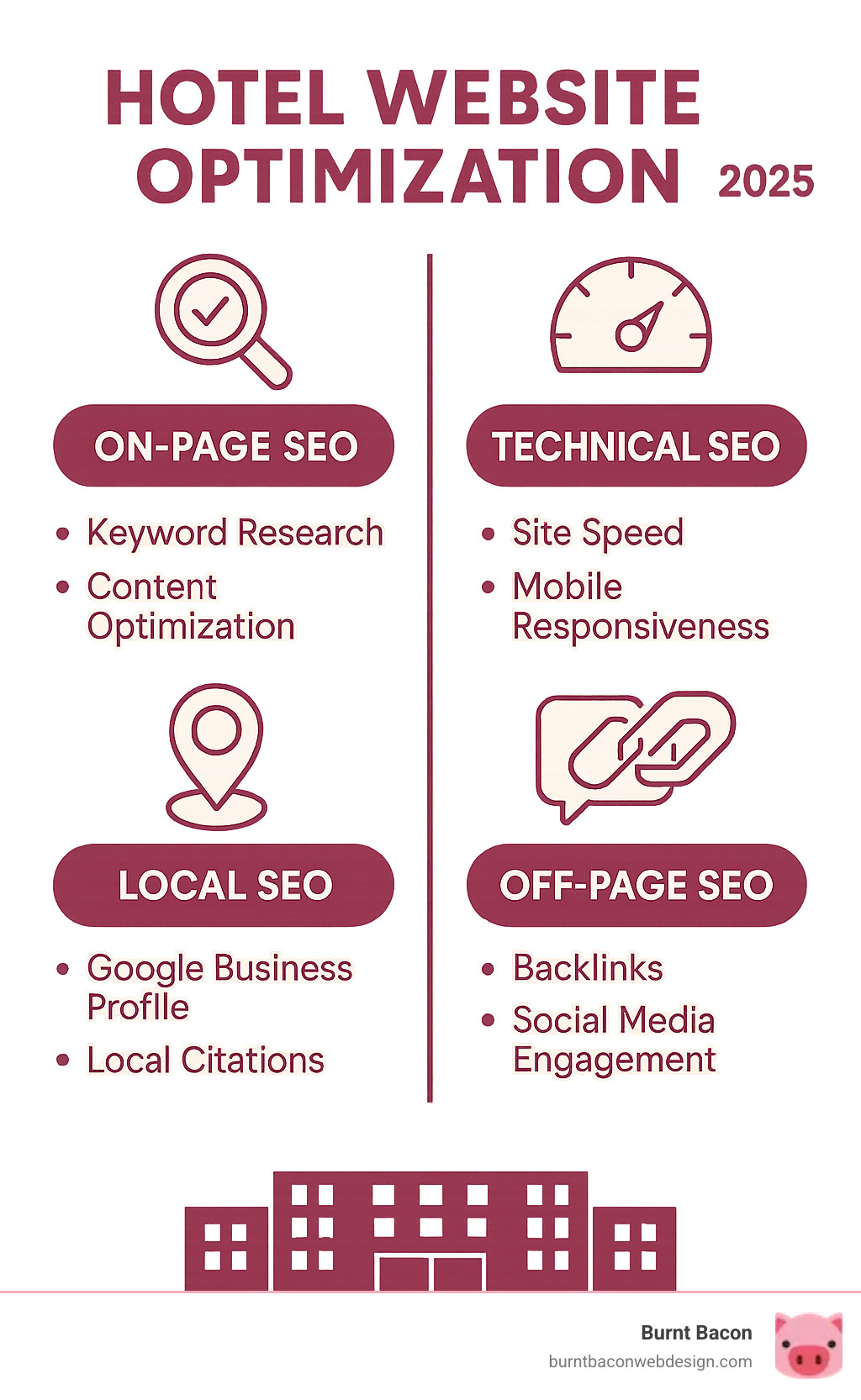
- On-Page SEO: Keywords, content, and meta tags
- Technical SEO: Site speed, mobile design, and security
- Local SEO: Google Business Profile and local citations
- Conversion Optimization: Booking engine and user experience
The stakes are high: 75% of travelers start their hotel search on Google, yet many hotel sites convert at just 2%. With 46% of all Google searches having local intent, optimization is vital for capturing nearby travelers.
| Direct Bookings | OTA Bookings |
|---|---|
| 0% commission fees | 15-25% commission fees |
| Full guest data access | Limited guest information |
| Complete pricing control | Rate parity requirements |
| Direct customer relationship | OTA owns the relationship |
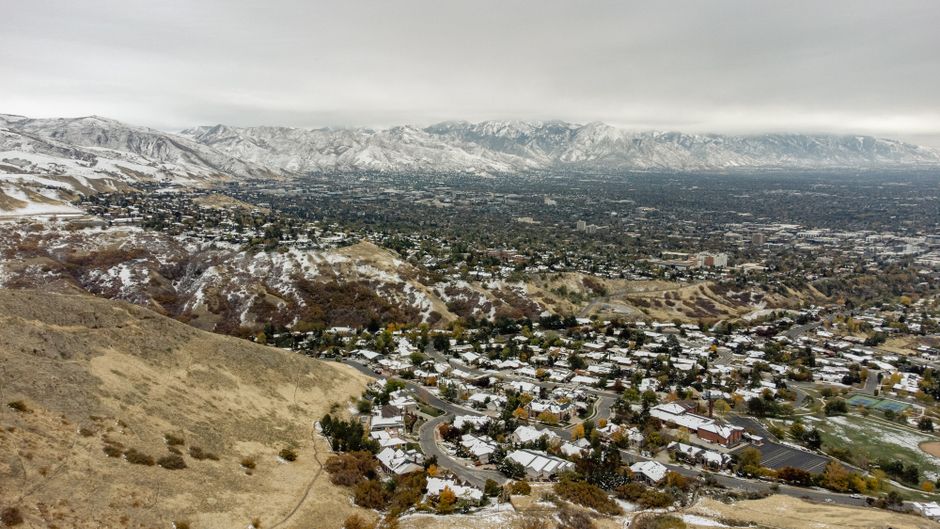
For Utah hotels, especially those in Salt Lake City and South Jordan, local optimization is key. The region’s booming tourism, world-class skiing, and national parks mean that capturing local search traffic directly impacts your bottom line.
I’m Craig Flickinger BB, founder of Burnt Bacon Web Design. Based in South Jordan, I’ve helped Utah businesses for over 10 years master hotel website optimization and SEO. My team helps hospitality clients boost direct bookings and cut their reliance on expensive third-party platforms.
On-Page & Technical SEO: The Digital Foundation of Your Hotel
Your hotel’s website is your digital front desk, and Google prioritizes sites that offer a great user experience. When someone searches for “ski resort lodging in Park City,” Google wants to show them sites that load quickly, work on mobile, and are secure. With Google’s mobile-first indexing, your mobile site’s performance is paramount, especially since most Utah travelers plan trips on their phones. Website security (HTTPS) is also non-negotiable for building trust with guests and search engines.
A slow website is a major roadblock. That’s why we offer specialized Website Speed Optimization Services to ensure your site meets Google’s Core Web Vitals—key metrics for site speed and responsiveness.
Mastering On-Page Hotel Website Optimization
Hotel website optimization begins with understanding how guests search. Keyword research helps us find the exact terms your guests use, from broad searches like “Salt Lake City hotel” to high-intent long-tail keywords like “pet-friendly boutique hotel near Temple Square.”
We then weave these keywords into your website through content optimization. This isn’t about keyword stuffing; it’s about creating helpful content that answers guest questions. A hotel blog with posts like “Best Hiking Trails Near Our Hotel” positions you as a local expert. Learn more in our guide on Website Traffic and Sales: What Affects Organic Keyword Search?.
- Meta Titles & Descriptions: Your ad on Google’s search results page. The title (under 60 characters) and description (under 158 characters) must be compelling enough to earn the click.
- Header Tags (H1, H2, H3): These structure your content, making it easy for readers and search engines to understand.
- Image Alt Text: Descriptions for your images that help with SEO and accessibility.
- Internal Linking: Connects related pages on your site, guiding guests to explore amenities, rooms, and local attractions.
Advanced Hotel Website Optimization with Technical SEO

Technical SEO is the behind-the-scenes work that ensures your website functions perfectly.
- Site Speed: Pages loading in under 2.5 seconds perform best. Anything over 8 seconds on mobile sends guests to competitors. We’ve helped many Utah hotels speed up their sites; find tips in our article on How to Speed Up My Site (2024 Update).
- Mobile-Friendliness: A responsive design ensures your site works flawlessly on any device, which is crucial for Utah’s active, on-the-go travelers.
- Schema Markup: This structured data gives Google detailed information about your hotel, rooms, and reviews, helping your listing stand out with rich results like star ratings and prices. Learn more about structured data.
- XML Sitemaps & Robots.txt: A sitemap guides search engines through your important pages, while a robots.txt file tells them which pages to ignore.
- HTTPS & Canonicalization: HTTPS secures guest data and boosts rankings, while canonicalization prevents duplicate content issues that can harm your site’s authority.
Local & Off-Page SEO: Building Authority and Attracting Travelers in Utah
While on-page SEO builds your foundation, off-page SEO builds your reputation across the internet. It’s about earning trust through external signals like backlinks and positive mentions, which tells Google your property is worth recommending. This digital word-of-mouth leads to higher rankings and more direct bookings. Our Google Ranking Improvement services focus on these trust-building strategies to help Utah hotels climb the search results.
Dominating the Map: Local SEO for Salt Lake City Hotels
With 46% of Google searches having local intent, local SEO is essential. When travelers search “hotels near me,” you need to be at the top.
- Google Business Profile (GBP): This free tool is your secret weapon, controlling your appearance on Google Search and Maps. Optimized hospitality profiles average 1,803 search views and 200 actions monthly. Keep your name, address, and phone number (NAP consistency) accurate, use high-quality photos, and post regular updates. Learn more in our guide: Boost Your Local Reach: Attract More Visitors to Your Google Business Profile.
- Local Citations: These are mentions of your hotel on directories like Yelp and TripAdvisor. Consistency across all platforms is key to avoiding search engine confusion.
- Geo-Targeted Keywords: Optimize for phrases like “luxury hotel near Temple Square” to capture users with clear local intent.
- Local Content: Create blog posts like “Your Guide to Sundance Film Festival Lodging” to position your hotel as a local expert and attract relevant search traffic.
- Online Review Management: 75% of people trust online reviews, and responding to them is critical. A Cornell study found that hotels responding to 40-45% of reviews can generate up to 2.2 times more booking revenue. Respond promptly and professionally to all feedback to show future guests you care.
For Utah hotels, from Salt Lake City to Park City, our Local SEO Salt Lake City services are designed to help you dominate your local market.
Building Credibility with Off-Page SEO
Backlinks are the backbone of off-page SEO—they are votes of confidence from other websites. High-quality backlinks from relevant, authoritative sources are far more valuable than numerous links from low-quality sites.
We focus on earning valuable links through strategies like guest posting on travel blogs, collaborating with local Utah businesses like ski resorts or tour companies, and working with influencers whose audiences match your target guests. While social media engagement doesn’t provide direct backlinks, it amplifies your content and increases the chance of earning them organically.
Effective link-building opportunities for hotels include:
- Partnerships with local tourism boards
- Collaborations with event organizers
- Features in local news outlets
- Guest blogging on travel websites
- Community sponsorships
- Creating unique, shareable content (e.g., local guides)
- Participation in industry awards
From Clicks to Bookings: Conversion and Revenue Optimization
Getting visitors to your website is only half the battle. Conversion Rate Optimization (CRO) turns those visitors into paying guests. If your site gets 100 visitors but only 2 book a room, CRO helps you fix the issues causing the other 98 to leave. By analyzing the user journey and using A/B testing to refine elements like your call-to-action (CTA) buttons, we can significantly increase your booking rate.
We also focus on revenue optimization, a broad approach that looks beyond room rates to maximize income from all sources, including your restaurant, spa, and events. This includes strategies like dynamic pricing, which automatically adjusts rates based on demand—perfect for Utah hotels during peak ski season or the Sundance Film Festival. To really maximize your conversion potential, check out our guide on Open up Higher Conversions: Best Practices for CRO Success.
Enhancing the User and Booking Experience
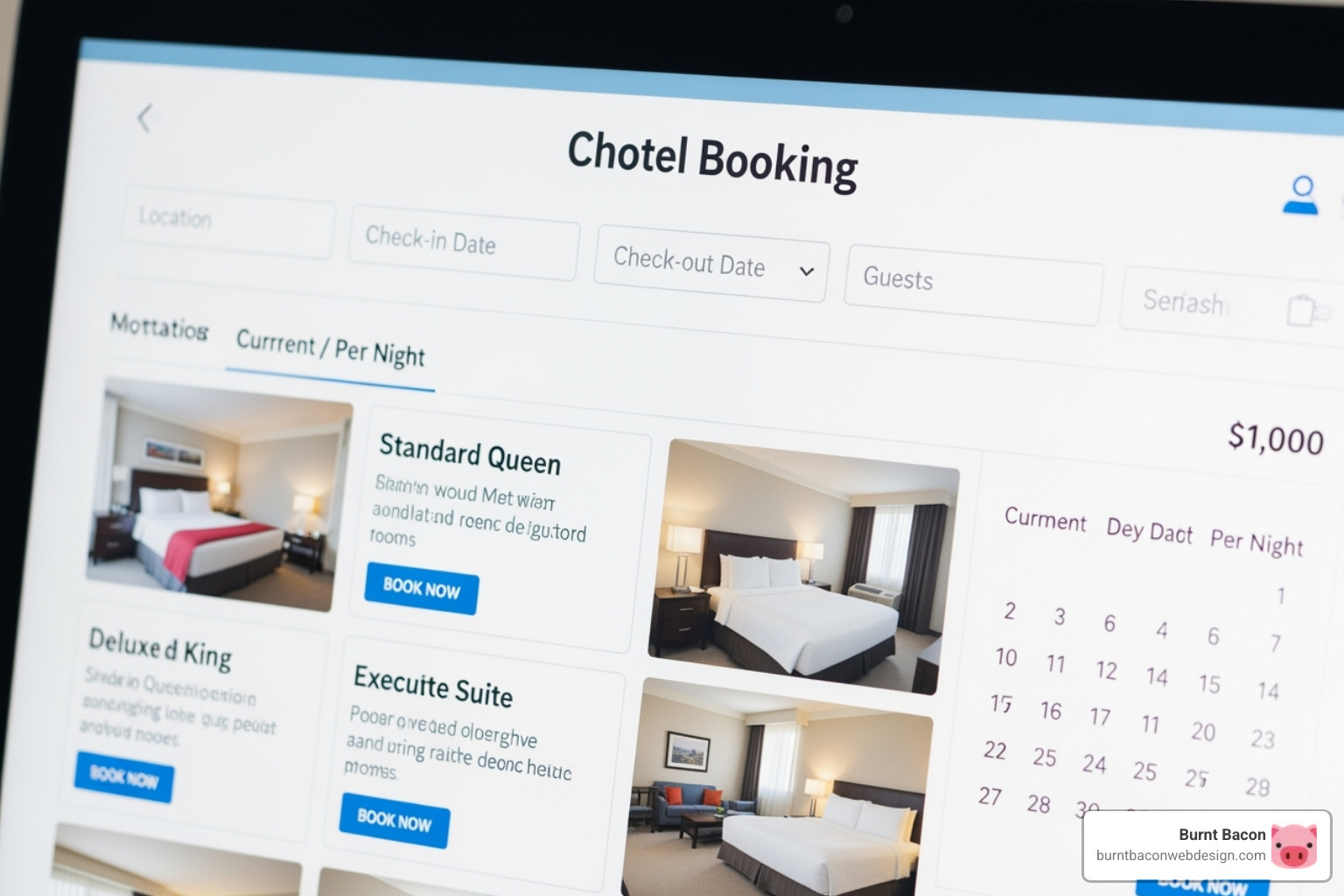
Your website should feel as welcoming as your lobby.
- Simple Navigation: Guests should find rooms, amenities, and booking options within a click or two.
- High-Quality Photos & Videos: Professional visuals help guests imagine their stay and are essential for booking an experience, not just a room.
- Seamless Booking Process: Your booking engine should be integrated, simple, and fast. Avoid clunky, multi-step forms that lead to abandoned carts.
- Mobile Booking Ease: With most travelers planning on their phones, your booking engine must be perfectly optimized for mobile devices.
- Chatbots & Loyalty Programs: Chatbots offer 24/7 support, while loyalty programs encourage repeat business, which is far more cost-effective than acquiring new customers.
- Personalization: Tailoring the experience based on past stays or preferences creates a powerful connection and drives loyalty.
Smart Revenue and Marketing Strategies
Beyond your website’s design, smart marketing can significantly boost revenue.
- Upselling & Cross-selling: Offer room upgrades, spa packages, or dinner reservations during the booking process. Bundled packages, like ski-and-stay deals for Utah winters, provide great value and increase revenue.
- Seasonal Promotions: Use special rates to attract guests during slower periods or create premium packages for high-demand times like festivals.
- SEM & Retargeting: While SEO builds long-term traffic, Search Engine Marketing (SEM) provides immediate visibility through paid ads. Retargeting shows your ads to users who have already visited your site, keeping your hotel top-of-mind.
- Email Marketing: Build an email list to send personalized offers to past and potential guests, one of the most effective ways to drive direct bookings.
Some of the most effective revenue optimization strategies include implementing dynamic pricing that adjusts rates based on real-time demand, using forecast demand data to predict busy periods, and creating targeted segmentation for different guest types. Length of stay restrictions during peak periods can help optimize occupancy, while effective channel management ensures your rates stay consistent across all booking platforms. Most importantly, active guest reviews and reputation management builds the trust that converts website visitors into confirmed reservations.
Frequently Asked Questions about Hotel SEO
What is the difference between on-page and off-page SEO for hotels?
On-page SEO is everything you control directly on your website. This includes keyword research (e.g., “boutique hotel Salt Lake City”), creating quality content, writing meta titles, and adding image alt text. It’s about making your site clear and appealing to both users and Google.
Off-page SEO, on the other hand, is about building your hotel’s reputation across the web. This involves earning high-quality backlinks from travel blogs or local tourism sites, managing online reviews, and engaging on social media. It proves to search engines that others trust and recommend your hotel.
How long does it take for hotel SEO to show results?
Hotel website optimization is a long-term strategy. While minor technical fixes can show results in weeks, significant improvements—like ranking for competitive terms or seeing a major lift in direct bookings—typically take 3 to 6 months. Google needs time to process your changes and see how users interact with your improved site. The good news is that SEO results compound, providing value for years to come.
Is SEO better than using OTAs like Expedia or Booking.com?
This isn’t about “better,” but about balance. OTAs like Expedia offer valuable exposure but charge high commissions (15-25%) and limit your access to guest data. This makes it hard to build direct relationships.
Hotel website optimization drives direct bookings, meaning you keep 100% of the revenue and own the customer relationship. The best strategy is to use OTAs to fill occupancy gaps while investing heavily in SEO to grow your direct bookings. Travelers searching for “Park City ski lodging” will happily book direct on a trustworthy, well-optimized site that makes booking easy.
Conclusion
The journey through hotel website optimization shows that your website is your most valuable sales tool. From a solid technical foundation to local SEO strategies that capture Utah travelers, every element works together to turn clicks into bookings.
SEO is a long-term investment that, unlike paid ads, builds sustainable growth. The work you do today will attract guests organically for years, boosting your profit margins. A holistic approach ensures your fast website, locally-focused content, and streamlined booking process create an experience that converts. For hotels in Salt Lake City, Park City, and across Utah, this local optimization is the key to being seen first.
At Burnt Bacon Web Design, we’ve spent over a decade crafting these strategies for Utah businesses. We build comprehensive digital plans that attract your ideal guests. We’re also proud to support our community through charitable giving to Make-A-Wish.
Ready to transform your hotel’s online presence? For a strategy customized to your property’s goals, explore our Hotel Website Optimization services. Let’s work together to fill those rooms with happy guests who found you exactly when they needed you most.