
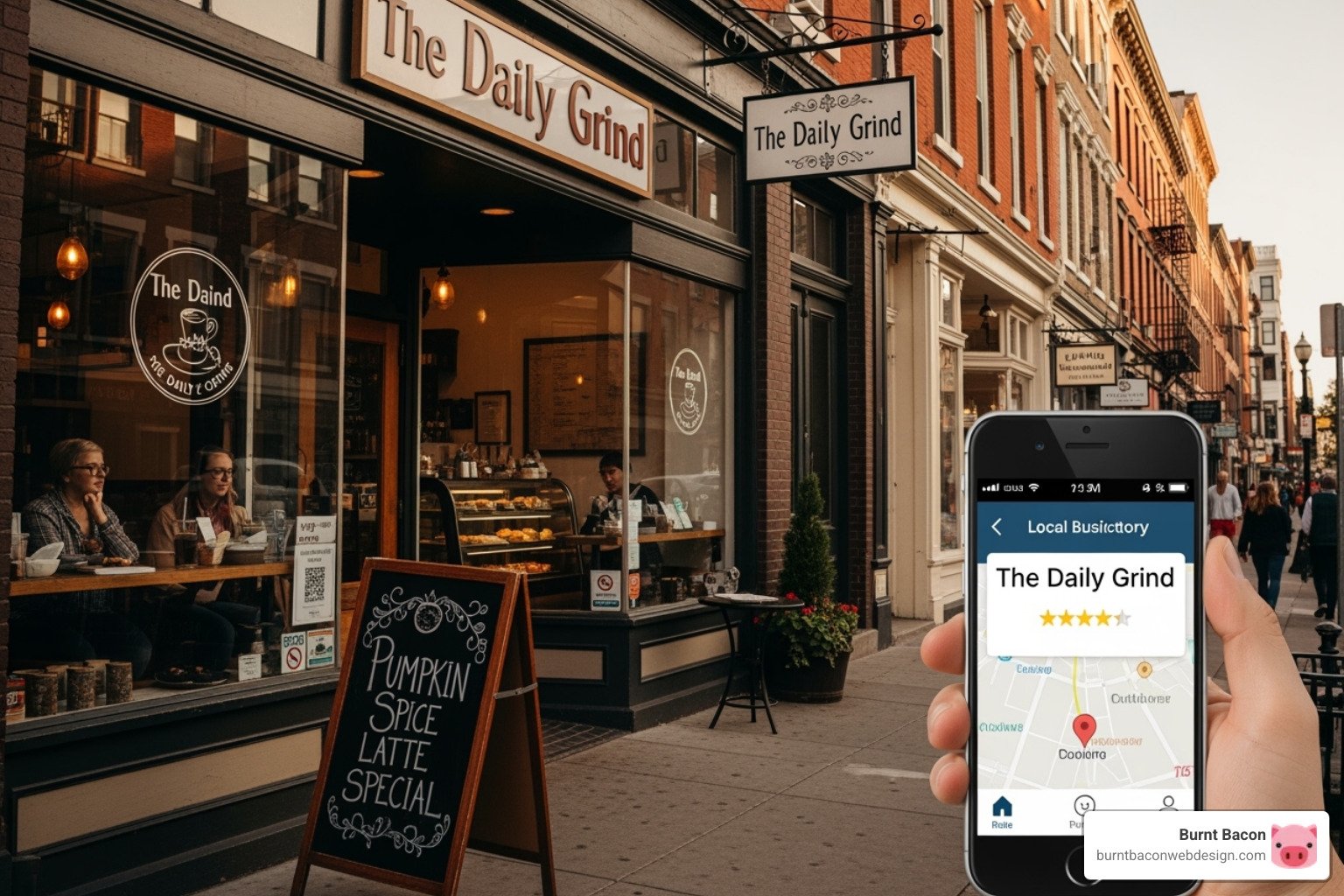
Why Local Citations Building is Your Local SEO Rocket Fuel
Local citations building is rocket fuel for any business wanting to stand out in local search results, especially in competitive areas like Salt Lake City, Utah. It involves listing your business accurately across many online platforms, which is crucial for your local SEO.
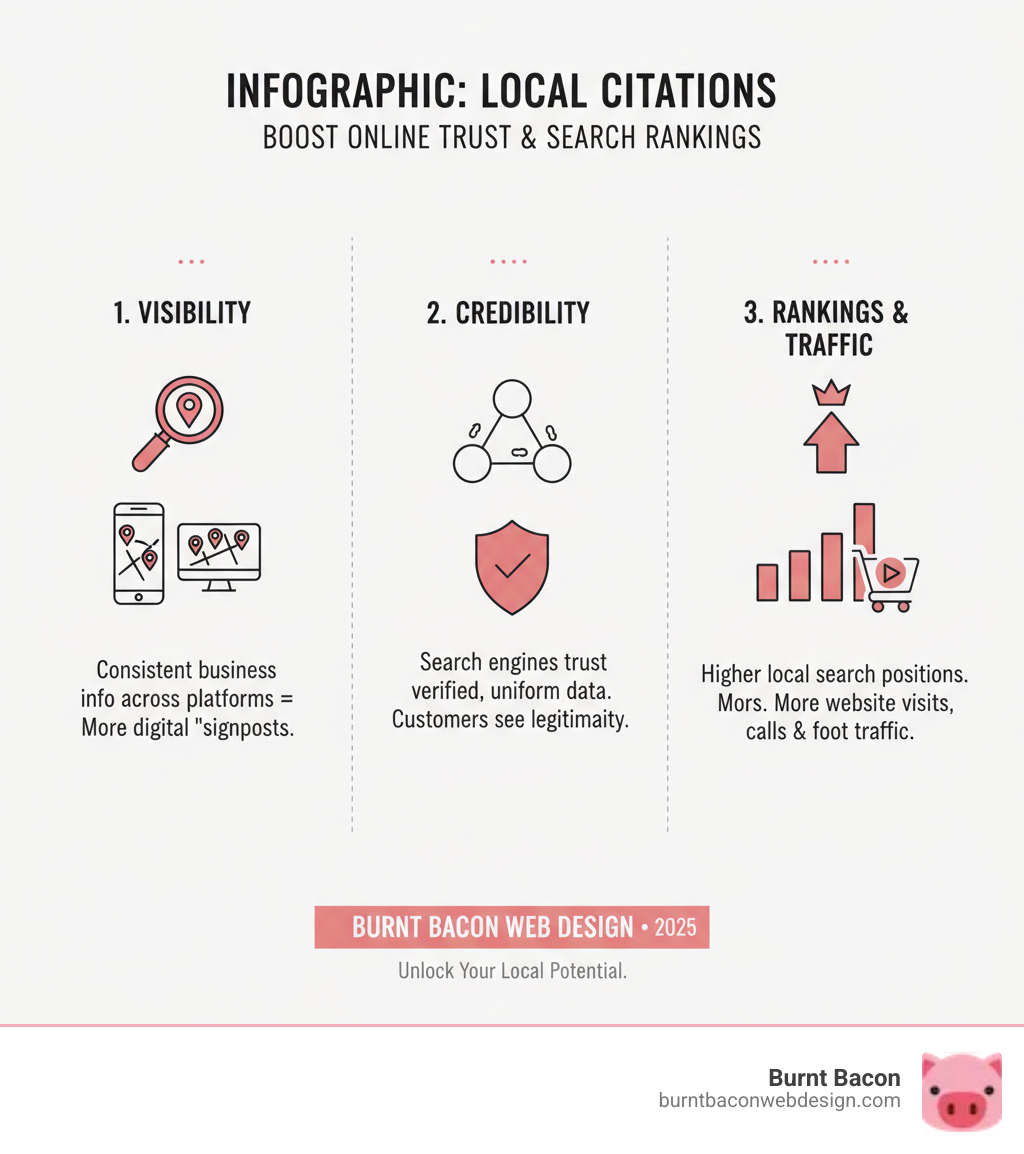
Here’s how local citations building helps your business:
- Boosts Local Rankings: Citations act as votes of confidence, helping search engines verify your business is real and relevant for local searches.
- Increases Online Visibility: More listings create more digital signposts for potential customers to find you.
- Builds Trust & Credibility: Consistent business information across the web signals that you’re legitimate and trustworthy.
- Drives More Customers: Increased visibility and trust lead to more website visits, phone calls, and foot traffic.
- Outperforms Competitors: A strong citation profile provides a significant edge in a competitive market like Utah.
This guide will walk you through everything you need to know to make your business easier to find.
I’m Craig Flickinger from Burnt Bacon Web Design. For over a decade, I’ve helped businesses in South Jordan, Utah, and beyond boost their online presence through expert web design and local citations building.
Simple guide to local citations building terms:
What Are Local Citations and Why Do They Matter for Utah Businesses?
A local citation is any online mention of your business’s core details: Name, Address, and Phone Number (NAP). It doesn’t need a link back to your site; the mention itself builds your digital footprint.
Think of citations as digital breadcrumbs. Every time your Salt Lake City bakery or South Jordan plumbing business is mentioned with its NAP, you build credibility. These mentions can appear in business directories, social media, or local news articles. In Utah’s competitive market, local citations building provides a real edge, acting as a ranking factor that helps you climb local search results.
Google uses citations to verify your business is legitimate. Consistent NAP information across credible websites helps you appear in Google’s Local Pack—the top three businesses shown in local search. Local citations building accounts for about 7% of key ranking factors, and businesses with strong citation profiles can perform up to 18 times better in online searches.
The Impact of Citations on Search Rankings and Trust
Google rewards businesses it can trust. When the search engine finds your business information repeated consistently across the web—from a listing on KSL Classifieds to a mention in a Salt Lake Tribune article—it builds confidence in your legitimacy. This directly impacts your search rankings. Inconsistent information, like conflicting phone numbers, creates a poor user experience and can harm your visibility or keep you out of the Local Pack.
Citations also boost your business’s E-E-A-T signals (Experience, Expertise, Authoritativeness, and Trustworthiness). Seeing your business on well-known directories builds customer confidence. This creates a positive cycle: better citations lead to higher rankings, more visibility, and more customers. It’s a foundational part of local search performance for any Utah business.
For more details on how we help businesses improve their search rankings, check out our SEO services.
Structured vs. Unstructured Citations
Not all citations are the same, but both types are valuable for local citations building.
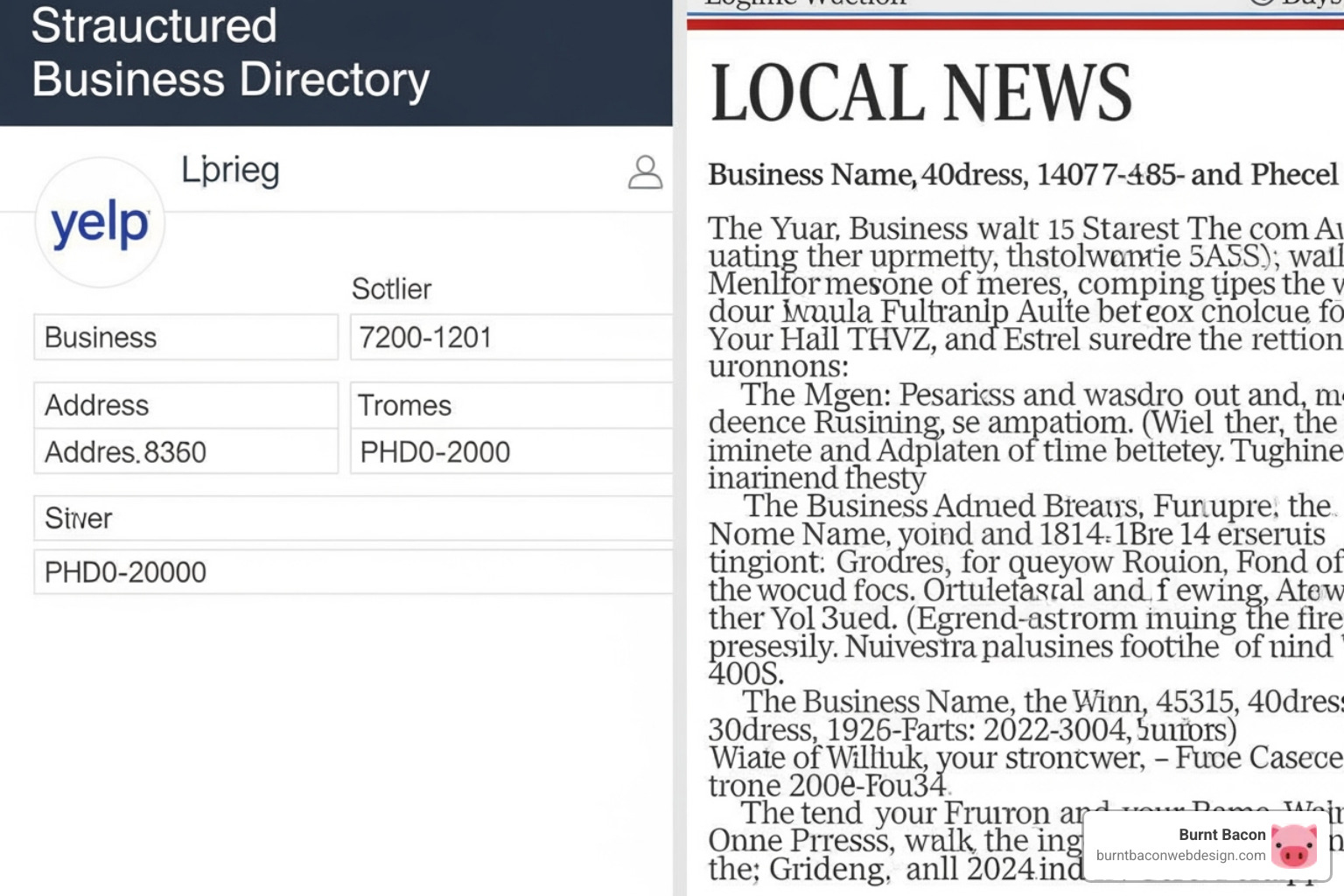
Structured citations are organized listings in business directories like Yelp, Google Business Profile, or a local Utah-based site like the Salt Lake Chamber of Commerce. They have specific fields for your NAP, website, and hours, making them easy for search engines to read. Your Google Business Profile is your most important structured citation.
Unstructured citations are more organic mentions in blog mentions, news articles, or social media posts. For example, a Salt Lake City food blogger might mention your restaurant and its address. These mentions feel natural and trustworthy to search engines and customers, and sometimes include valuable backlinks.
Both types work together. Structured citations build a foundation of accuracy, while unstructured citations add authenticity and community recognition.
The Ultimate Guide to Local Citations Building
Building citations requires a strategic approach. It’s about creating a digital paper trail that proves your business is real, trustworthy, and located where you say it is. This process is a cornerstone of effective Off-Page SEO, establishing your authority in the local Utah market. Here are three essential steps.
Step 1: Establish Your Foundational NAP
Before submitting your business anywhere, you must define your foundational Name, Address, and Phone Number (NAP). This information must be exactly the same everywhere.
- Business Name: Your official, legal name.
- Address: Your complete physical street address, formatted identically every time (e.g., “Street” vs. “St.”).
- Phone Number: Your primary local number, with a consistent format.
- Other Details: Your website URL, a keyword-rich business description, operating hours, and business categories.
NAP consistency is critical. Inconsistent information makes search engines question your legitimacy. In fact, 80% of consumers lose trust in businesses with incorrect online contact details. To avoid this, create a “master information sheet” (a Google Doc or spreadsheet) and copy-paste from it for every submission. This eliminates typos and ensures perfect uniformity.
Step 2: Find High-Value Citation Opportunities
With your NAP locked down, identify high-value platforms. Quality always beats quantity in local citations building.
- Foundational Sites: Every Utah business needs a complete and optimized profile on Google Business Profile, Apple Business Connect, Bing Places for Business, Facebook, and Yelp.
- Data Aggregators: Services like Data Axle and Neustar Localeze feed your information to hundreds of other directories, creating a ripple effect.
- Niche Directories: Target sites where your customers are. For example, a Salt Lake City law firm should be on Avvo and FindLaw, while a Park City ski shop should target tourism and outdoor recreation sites.
- Local Utah Directories: These are goldmines for local relevance. Look for listings with the Salt Lake Chamber of Commerce, city-specific directories in places like South Jordan, Utah tourism boards, and local news sites.
For detailed guidance on optimizing your most important listing, check out our Google My Business resource.
Step 3: Audit Existing Listings and Spy on Competitors
Before building new citations, understand your current landscape.
- Conduct a Citation Audit: Manually check your listings on major platforms (Google, Bing, Yelp, etc.) for accuracy. Use Google searches like
"[Your Business Name]" + "[Your Phone Number]"to find other mentions. Tools like Moz Local Listing Checker or BrightLocal can automate this. - Fix Inconsistencies & Duplicates: If you find multiple or incorrect listings, take action. Delete inaccurate duplicates and submit correction requests to the platforms to clean up your online presence.
- Perform Competitive Intelligence: Identify competitors who outrank you in local Salt Lake City or South Jordan searches. Use tools like Whitespark Local Citation Finder or simple Google searches (
"[Competitor Name]" + "reviews") to see where they are listed. This gives you a ready-made list of high-value citation opportunities and is a key part of your Competitive SEO Analysis.
Your Step-by-Step Manual Submission Process
While automated tools are fast, manual local citations building gives you complete control, ensuring every detail is perfect. For many Utah businesses, especially those with a single location, this hands-on approach delivers the best results.

Here’s the manual process:
- Prepare Your Master Info Sheet: Have your document with the correct NAP and other details ready.
- Search Before Creating: On your chosen directory, always search for your business first. You may find an auto-generated listing.
- Claim or Create: If a listing exists, claim it. The verification process may involve an email, phone call, or even a postcard. If no listing exists, create a new one.
- Submit Your Information: Copy and paste your details directly from your master sheet to ensure accuracy. Fill out every available field, including categories and photos.
- Verify Your Listing: Complete the verification step promptly. Reputable directories require this to confirm you’re the legitimate owner.
- Track Everything: Use a spreadsheet to record the directory name, listing URL, submission date, status, and login credentials. This will save you major headaches later.
Best Practices for Manual Local Citations Building
- Prioritize Accuracy: Double-check every field before submitting. A single typo can create inconsistencies.
- Use a Professional Email: An address like
info@yourbusiness.comlooks more credible than a personal email. - Choose Categories Wisely: Be specific enough to attract the right customers but broad enough not to limit your visibility.
- Write a Compelling Description: Use this space to highlight what makes your business unique, including relevant keywords and your location.
- Upload High-Quality Photos: Include your logo, storefront, and images of your products or services to build trust visually.
- Document Everything: Keep detailed records of all submissions, including login info and verification methods.
Common Mistakes in Local Citations Building to Avoid
- Inconsistent NAP: Different phone numbers, incorrect suite numbers, or varying business names confuse search engines and customers. For example, listing your address as ‘S Temple’ on one site and ‘South Temple’ on another can confuse Google about your Salt Lake City location. 80% of consumers lose trust over incorrect contact info.
- The Quantity Trap: Focusing on the number of citations over their quality. A listing on the Salt Lake Chamber of Commerce site is worth more than ten on unknown, generic directories.
- Not Tracking Submissions: Without a record, updating your information becomes a nightmare.
- Ignoring Incorrect Listings: Finding an old, inaccurate listing and leaving it there sends mixed signals. If your South Jordan business moved five years ago, that old address on a forgotten directory is still hurting your SEO. You must actively correct or remove it.
- Forgetting to Update: When you move, change your phone number, or adjust hours, you must update all your citations to maintain consistency.
Strategy and Tools: Manual vs. Automated Services
When starting with local citations building, you face a key choice: a manual approach or an automated service. The right answer depends on your time, budget, and the number of locations you manage, from a single shop in Salt Lake City to multiple branches across Utah.
| Feature | Manual Citation Building | Using a Citation Management Service (e.g., Yext, BrightLocal, Whitespark, Semrush Local) |
|---|---|---|
| Time Commitment | High (hours/days per location) | Low (minutes) |
| Cost | Free (your time) | Varies (monthly/annual fees, per-listing costs) |
| Control Over Listings | Very High (you own and manage each listing directly) | High (service manages, but you often retain ownership) |
| Accuracy | Very High (if diligent) | High (service ensures consistency) |
| Scalability | Low (time-consuming for multiple locations) | Very High (designed for multi-location businesses) |
| Duplicate Management | Manual identification & resolution | Automated scanning & suppression/correction |
| Updates | Manual update on each platform | Centralized update, pushed to many platforms |
| Data Aggregators | Manual submission to aggregators | Often includes submission to aggregators |
| Ownership | You always own the listing | Varies; confirm you own listings if you cancel the service |
Manual building is ideal for businesses on a tight budget with time to spare. It offers complete control and is effective for a single-location business in South Jordan or Salt Lake City.
Citation management services are lifesavers if time is your most valuable asset or you manage multiple locations. They save immense time—updating hours for 50 locations can take minutes instead of weeks. These tools excel at maintaining consistency, detecting and suppressing duplicates, and providing wider reach through data aggregators, all managed from a single dashboard.
Before signing up for a service, ask critical questions: Which directories are included? Do you retain ownership of the listings if you cancel? Losing your local citations building work is a risk you want to avoid.
Many businesses use a hybrid approach: manually managing critical listings like Google Business Profile and using automation for broader distribution. This offers both control and efficiency.
Measuring Success and Future-Proofing Your Strategy
You’ve rolled up your sleeves and built a solid foundation of local citations for your Salt Lake City or South Jordan business. Now comes the exciting part—watching those efforts translate into real results! But how do you know if your local citations building work is actually moving the needle?
The impact of local citations building is often tangible and can be tracked through several key metrics.
- Website Clicks: Use Google Analytics to see which directories are sending traffic to your site. Check your referral traffic to see if Utah-specific sites like the Salt Lake Chamber directory or KSL Classifieds are sending you visitors.
- Phone Calls: A noticeable increase in calls is a strong indicator of success. Google Business Profile tracks calls from your listing, and call-tracking numbers can be used on other directories to pinpoint the source.
- Direction Requests: For brick-and-mortar businesses in places like South Jordan, direction requests in Google Maps are a direct result of your improved visibility. These are customers on their way to your door.
- Google Business Profile Insights: This dashboard is a goldmine of data, showing how many people viewed your listing, clicked for directions, visited your site, or called. It directly demonstrates the value of your Google Business Profile optimization efforts.
- Local Search Rankings: The most satisfying metric is watching your business climb higher in Google’s Local Pack and local organic results for your target keywords, like ‘plumber South Jordan’ or ‘best coffee Salt Lake City’.
The Evolving Landscape: AI Search and Schema Markup
The world of search is evolving, and your local citations building strategy must adapt. AI-powered search is becoming more common, and these systems rely on consistent, reliable data to provide accurate answers about local businesses. Strong citations ensure your Salt Lake City business is recommended correctly.
Schema markup for local businesses complements your citation efforts. This is code you add to your own website to explicitly tell search engines your business details (NAP, hours, services, etc.).
The combination of strong external citations and proper on-site schema markup creates a powerful signal of trust for search engines. This confidence translates into better rankings and visibility in both traditional search and emerging AI-powered tools, future-proofing your digital presence.
Frequently Asked Questions about Local Citations
Business owners across Utah often have questions about local citations building. Here are answers to the most common ones.
How many citations do I actually need?
There’s no magic number; quality beats quantity. Start with the foundational citations: Google Business Profile, Apple Business Connect, Bing Places, Facebook, and Yelp. After optimizing those, aim for 10-25 additional listings on directories highly relevant to your industry and location.
A Salt Lake City restaurant, for example, should focus on food and tourism directories, not random business sites. To find a good benchmark, analyze your top-ranking local competitors. If they are listed on 30 relevant sites, that’s a good target for you. It’s better to have 15 accurate, complete citations than 50 sloppy ones.
How long does it take for citations to have an effect on rankings?
Patience is key. Some directories publish listings instantly, while others take weeks or months. After that, Google needs time to crawl and index the new information. You might see minor improvements in a few weeks, but significant ranking changes typically take several months.
Treat local citations building as an ongoing process. Consistent monitoring, updating, and adding new relevant citations over time builds the trust signals that lead to lasting ranking improvements.
How do I handle citations for a service-area business without a public address?
This is a common issue for Utah service businesses, like plumbers in South Jordan or electricians covering the Salt Lake Valley. You can build citations without publicizing your home or private office.
- Use Google Business Profile’s Service Area Feature: This is critical. You can set your business as a Service Area Business, define your service region, and hide your physical address from the public. Google still verifies your address privately.
- Check Directory Policies: Other directories have varying policies. Some allow you to list a service area, while others may require a physical address. Review each site’s rules before submitting.
- Maintain Consistency: Whatever you decide, be consistent. If you use a physical address on some directories, use the same one everywhere. If you use service areas, keep them consistent. Avoid sending mixed signals to search engines and customers.
While service-area businesses have unique challenges, the fundamentals of local citations building—accuracy and consistency—still apply.
Start Building Your Local Presence Today
Local citations building isn’t just a technical SEO task; it’s a practical way to help your Utah business get found by customers who are ready to buy. It’s digital word-of-mouth that works for you 24/7.
The key takeaways are simple: consistency is king, quality beats quantity, and a smart citation strategy allows even small businesses in South Jordan to compete with larger players.
You don’t have to do everything at once. Start by checking your Google Business Profile right now. Ensure your name, address, and phone number are perfect. Then, pick three more relevant directories and get listed this week. The businesses that take action, even small steps, are the ones that succeed online.
At Burnt Bacon Web Design, we’ve helped businesses in Salt Lake City, South Jordan, and across Utah build stronger online presences for over a decade. We know the local market and get genuinely excited when we see a local business climb the search rankings.
If you’re ready to get serious about your local presence but want expert guidance, we can help. We offer a free video audit to provide specific, actionable recommendations for your business. No sales pitch, just honest insights.
Ready to make your business easier to find? Boost your rankings with Local SEO in Salt Lake City and let’s build your local presence together.