
Why a Hotel SEO Audit is Your Key to More Direct Bookings
A hotel SEO audit is a comprehensive evaluation of your website’s search performance, identifying technical issues, content gaps, and missed opportunities that prevent guests from booking directly. A complete audit covers technical health, on-page optimization, local SEO, backlink analysis, and content quality.
In the competitive hospitality industry, where guests check up to 35 sites before booking, your online presence is crucial. A thorough audit can uncover $50,000-$250,000 in recoverable direct booking revenue. With factors like page speed directly impacting conversions and AI reshaping search, regular audits are essential for Utah hotels to compete against major booking platforms.
I’m Craig Flickinger from Burnt Bacon Web Design, based in South Jordan, UT. For over 10 years, I’ve helped businesses in Salt Lake City and across Utah optimize their websites, conducting hotel SEO audits that uncover significant revenue opportunities. This guide will walk you through auditing your hotel’s SEO to turn more searches into direct bookings.
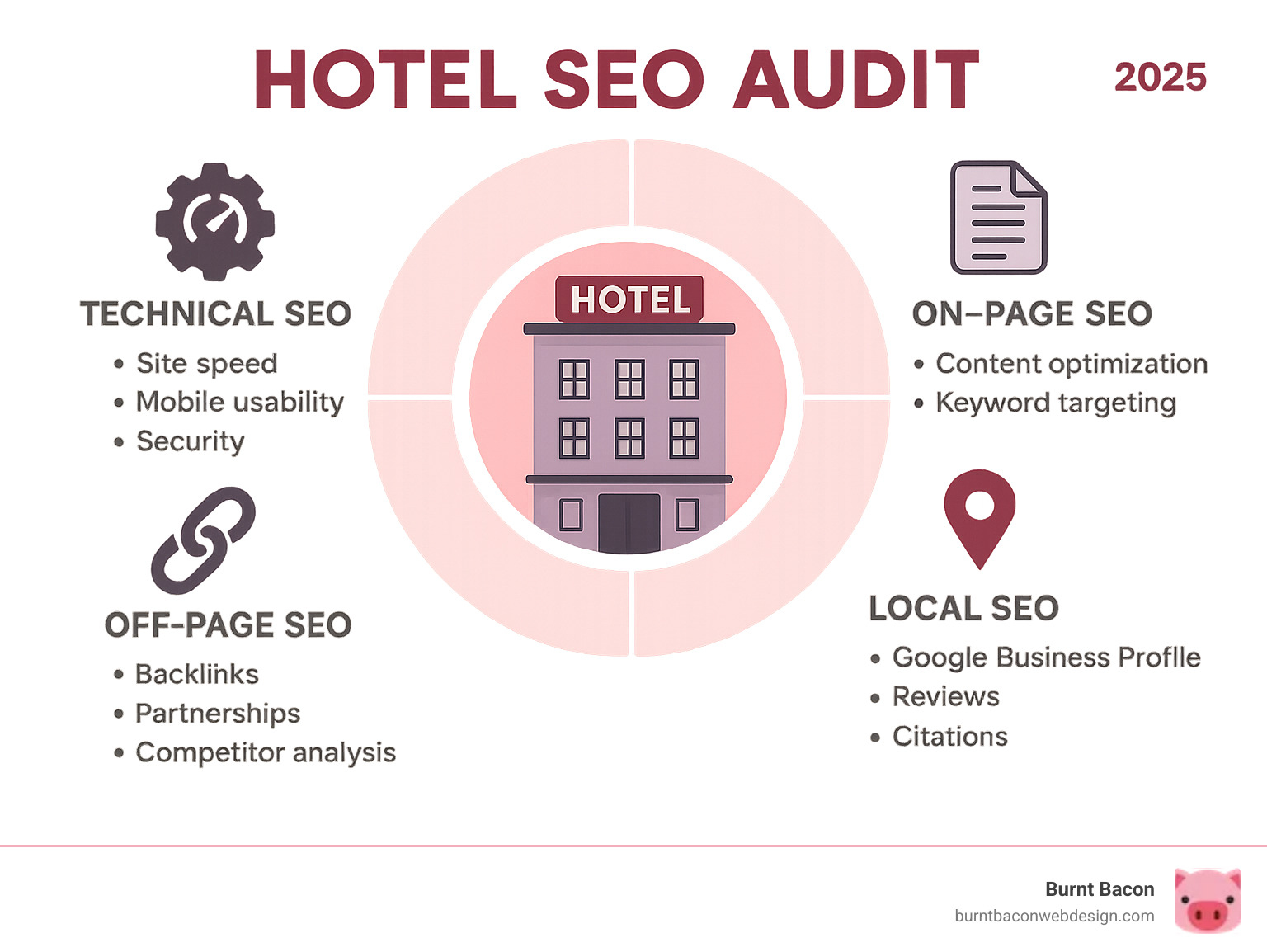
The Foundation: A Technical SEO Health Check
Think of your website’s technical SEO as its foundation. If it’s shaky, potential guests will leave before seeing your offers. A hotel SEO audit ensures search engines can efficiently crawl and index your site, meaning they can find your pages and list them in search results. We examine critical factors like site speed and mobile-first indexing, as your mobile experience must be flawless.
A “Not Secure” warning on your site deters visitors and hurts rankings, as Google has prioritized secure sites since 2014. We also ensure your XML sitemaps (a roadmap for search engines) and robots.txt file (which grants or denies access to certain pages) are correctly configured. It’s surprisingly common for hotels to accidentally block their own booking pages.
A one-second page load delay can cut conversions by 7%, a significant loss for Utah hotels. For detailed strategies, see our guide on How to Speed Up My Site (2024 Update).
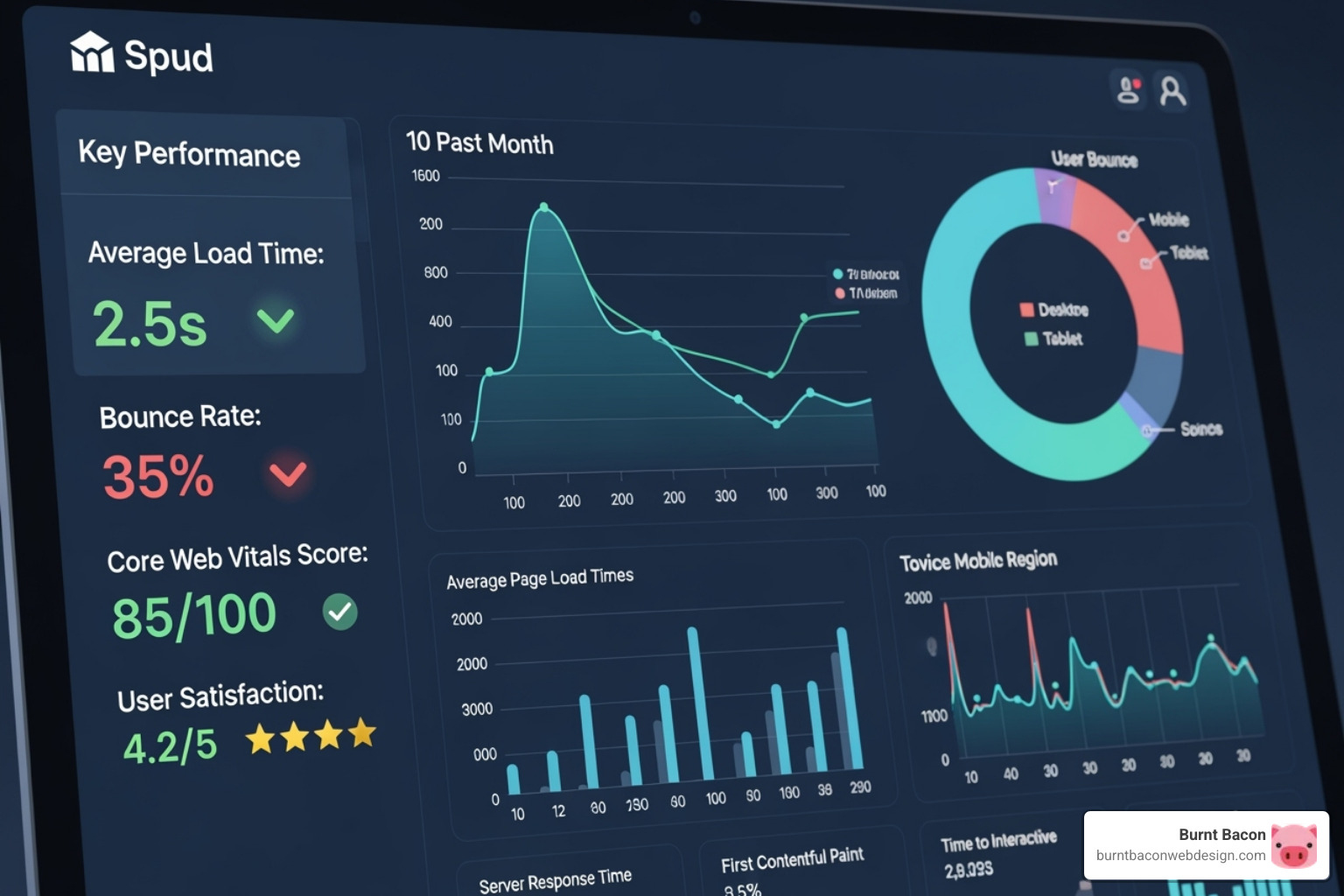
Assessing Your Website’s Core Web Vitals and Mobile Usability
Travelers have little patience, which is why Core Web Vitals are critical. These metrics measure user experience: Largest Contentful Paint (LCP) for loading speed, First Input Delay (FID) for interactivity, and Cumulative Layout Shift (CLS) for visual stability. A hotel SEO audit pinpoints issues, like large images slowing down your site, which can be fixed with compression and caching. For more, see Google’s guide on Understanding Core Web Vitals.
Since Google uses mobile-first indexing, your mobile site’s performance is paramount. Most bookings happen on mobile, so your site must be responsive, with large, easy-to-tap buttons, ensuring a smooth experience for someone searching “hotels near Salt Lake City” on their phone.
Critical Security and Accessibility Checks
Website security is about protecting guest data and trust. An SSL certificate (the browser padlock) is non-negotiable; without it, browsers warn visitors your site is “Not Secure.” Our audits include malware scans and checks for outdated CMS and plugin software, which are common security vulnerabilities.
We also fix broken links that lead to 404 error pages, as these frustrate users and hurt SEO. Finally, we verify that canonical tags are correctly implemented to tell search engines the primary version of a page, preventing duplicate content issues and consolidating your ranking power.
Optimizing for Guests and Google: On-Page SEO & Content
With a solid technical foundation, the next step in your hotel SEO audit is optimizing your content to be irresistible to both guests and Google. On-page SEO is about applying hospitality to your website.
We start with keyword research to understand how guests search for hotels like yours, from “boutique hotels near Temple Square” to “family-friendly accommodations in Park City.” Understanding user intent is key. Your internal linking structure should guide guests seamlessly through your site, while schema markup provides Google with structured data like ratings and pricing that can improve your search listings. For more on this, see our guide on Website Traffic and Sales: What Affects Organic Keyword Search?.

How to Conduct an On-Page Hotel SEO Audit
Every on-page element must work hard. Your title tags (50-60 characters) are your first impression in search results. Meta descriptions (120-158 characters) are your sales pitch to earn the click. Use a clear heading structure (H1, H2s) to organize content for readers and search engines. Every image needs descriptive image alt text for accessibility and context (e.g., “King suite with downtown Salt Lake City skyline views”). Finally, use clean, SEO-friendly URLs like “/luxury-suites” instead of “/page?id=12345.”
To build trust, showcase genuine guest experiences and local knowledge, demonstrating expertise and authority. Learn more about Demonstrating E-E-A-T in your content to strengthen your strategy.
Evaluating Content Quality and Relevance
Your content is where your hotel’s personality shines, and where many hotel SEO audits find the biggest opportunities. Freshness is vital; an outdated blog post can hurt your rankings. Search engines favor regularly updated sites.
Local relevance is your advantage against large chains. Create content about “things to do in Salt Lake City” or “best hiking trails near Provo” to position your hotel as a local expert. Your blog should offer valuable local insights. Your core pages also need compelling copy. Room descriptions should paint a picture, and amenity pages should explain the benefits to your guests.
Finally, avoid duplicate content by ensuring every page has a unique purpose and voice to prevent your pages from competing against each other in search results.
Your Complete Hotel SEO Audit for Local Dominance
When guests search “hotels near me” or “boutique hotel Salt Lake City,” you need to appear first. For Utah hotels, local SEO dominance is essential for capturing high-intent travelers. Most hotel searches are local, so our hotel SEO audit scrutinizes your local presence.
This starts with your Google Business Profile (GBP) but also includes online reviews, local citations, and competitor analysis. NAP consistency (Name, Address, Phone Number) across all platforms is critical; even minor differences can confuse search engines and harm your visibility. We also analyze your backlink profile for opportunities with local Utah businesses and tourism boards. Learn more in our guide on the Importance of Local SEO in Salt Lake City.
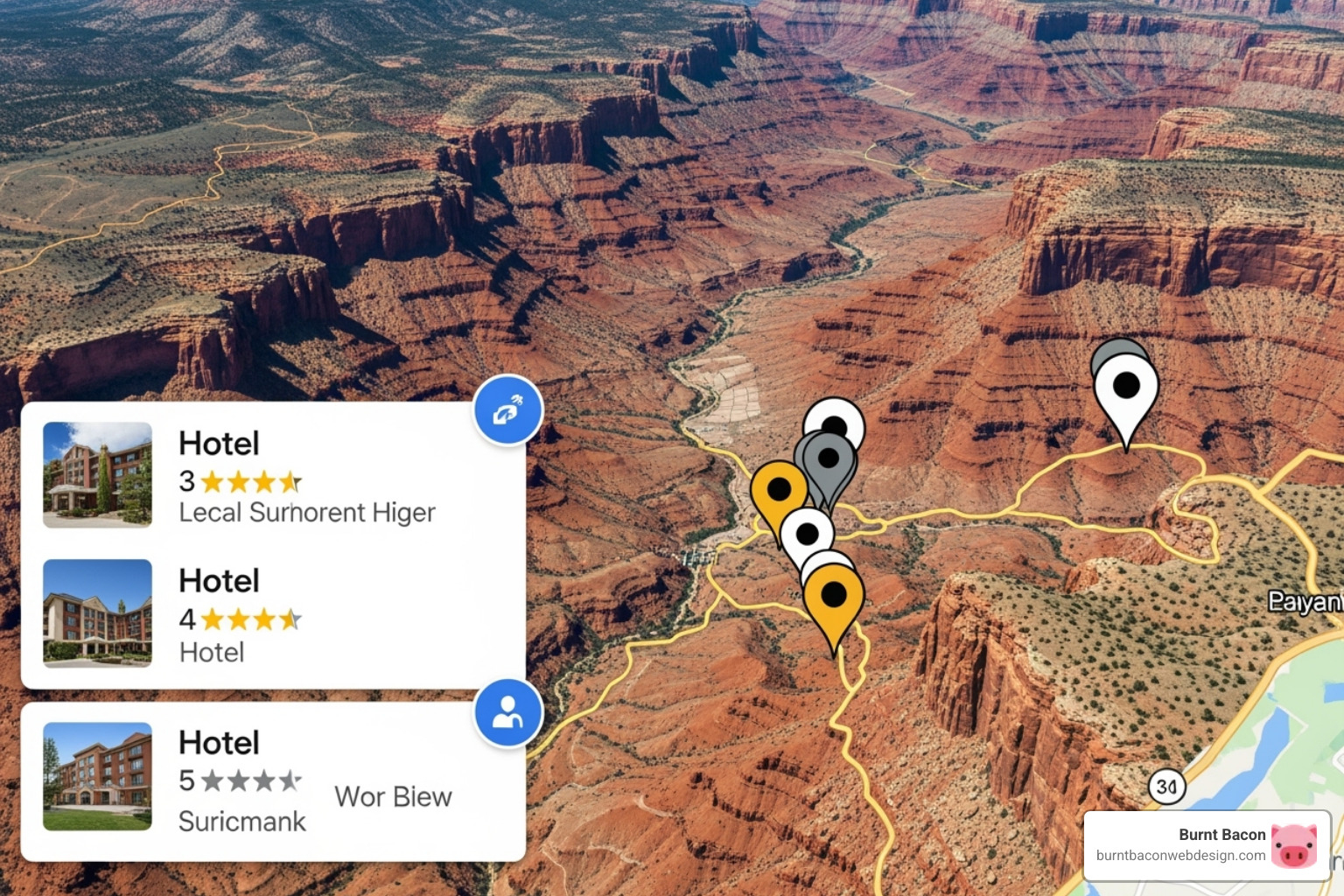
Mastering Your Local Presence with a Hotel SEO Audit
Your Google Business Profile is your digital front desk. A hotel SEO audit ensures it’s optimized with high-quality photos, accurate information, and a direct booking link. Regular updates signal to Google that you’re an active business. Learn more about Optimizing your Google Business Profile.
Your NAP consistency must be perfect across your website, GBP, social media, and directories like Yelp and TripAdvisor. Online reviews are powerful social proof; 93% of travelers say they influence booking decisions. We focus on review management, which includes encouraging positive reviews and responding professionally to all feedback. 63% of consumers may update a negative review if their issue is resolved. Finally, local link building with relevant Utah businesses, like tourism boards or event venues, boosts your local authority.
Analyzing Backlinks and Competitors
Backlinks act as recommendations from other websites. In a hotel SEO audit, we prioritize quality over quantity. A link from the Utah Office of Tourism is far more valuable than hundreds of low-quality directory links. We also scan for toxic links that could be harming your SEO.
Competitor analysis provides insight into what’s working in the Salt Lake City and South Jordan hospitality markets. We analyze your local competitors’ backlinks, keywords, and online positioning to find gaps in their strategy. This intelligence helps us develop a superior strategy to drive more direct bookings and reduce reliance on commission-based platforms. For more, explore our guide on Competitive SEO Analysis.
From Audit to Action: Tools, Trends, and Timing
A hotel SEO audit is a roadmap, not a one-time fix. SEO is like tending a garden; it requires regular care. A one-off SEO audit is a valuable snapshot of your website’s current health, identifying critical issues and quick wins. An ongoing monthly SEO plan, however, provides continuous monitoring and adaptation, like having a personal trainer for your website. It’s the difference between treating problems and preventing them, ensuring sustained growth and a competitive edge.
| Feature | One-Off SEO Audit | Ongoing Monthly SEO Plan |
|---|---|---|
| Purpose | Identifies current issues, provides a snapshot | Continuous monitoring, adaptation to algorithm changes, long-term growth |
| Scope | Comprehensive review of all SEO pillars at a point in time | Continuous optimization across all SEO pillars, including new opportunities |
| Deliverables | Detailed report with findings and recommendations | Regular reports, ongoing tasks, strategy adjustments, proactive issue resolution |
| Benefit | Identifies quick wins and critical fixes | Sustained ranking improvements, increased direct bookings, competitive advantage |
| Flexibility | Fixed scope | Agile, adapts to market changes and new trends |
If you’re ready for that level of support, our Dedicated SEO Team is here to help Utah hotels dominate their local markets.
Essential Tools and Audit Frequency
A proper hotel SEO audit requires the right tools. Google Search Console offers direct insights from Google on crawl errors and search queries. Google Analytics shows what users do on your site. For deeper analysis, we use professional tools like Screaming Frog for technical audits and other platforms for backlink analysis.
For frequency, we recommend a layered approach: monthly mini-audits for quick health checks, quarterly technical reviews for preventive maintenance, and a comprehensive annual strategic audit to reassess your entire strategy and adapt to changes in the Utah tourism market.
Adapting to AI and Future-Proofing Your Strategy
The search landscape is rapidly changing, led by AI. AI Overviews in search results mean content must be structured to answer questions clearly while still encouraging clicks to your site. People now use conversational queries like “What are the best family-friendly hotels near Temple Square?” We optimize for these natural language searches.
Structured data (schema) is more critical than ever, helping AI systems understand your rates, amenities, and availability. To future-proof your strategy, focus on what makes your hotel unique—experiences AI can’t replicate, like your views of the Wasatch Front or your local expertise on South Jordan’s best restaurants. We help showcase this through engaging content and continuously monitor search trends to ensure your strategy thrives in the AI era.
Frequently Asked Questions about Hotel SEO Audits
How can a hotel SEO audit increase direct bookings?
An audit fixes technical and content issues that prevent guests from finding and booking on your site. By improving your rank for high-intent keywords (like “luxury hotel Salt Lake City”) and enhancing the user experience (e.g., mobile speed, easy navigation), an audit clears the path for more commission-free, direct bookings. It addresses visibility problems and on-site barriers that cause potential guests to leave.
How often should my hotel conduct an SEO audit?
A comprehensive hotel SEO audit is recommended annually. However, SEO requires ongoing attention. We suggest monthly checks on rankings and traffic, plus quarterly reviews of your technical health and local listings. This regular monitoring helps you stay ahead of competitors and adapt to algorithm changes and seasonal trends in the Utah tourism market.
What is the most important part of a hotel SEO audit?
While all parts are interconnected, local SEO is the most critical for a hotel. Your physical location is your main asset. People search locally (e.g., “hotel near Temple Square”). Therefore, optimizing your Google Business Profile, ensuring NAP consistency, and managing your local review profile will have the most immediate and significant impact on attracting nearby travelers ready to book.
Turn Your Audit into Action and Boost Bookings
Your hotel SEO audit is a treasure map to more direct bookings. The real value comes from turning its findings into action. By systematically improving your technical health, on-page content, and local presence, you create a seamless digital journey for your guests, from their first search to the final click on “Book Now.”
Implementation is key. We prioritize audit findings to tackle high-impact items first, building a long-term strategy for sustained growth. An audit is just the beginning. At Burnt Bacon, we don’t just hand you a report; we help you implement the changes and see real results. As a South Jordan-based agency serving the greater Salt Lake City area, we understand the local market. Let our experts turn your audit insights into measurable booking growth with our Hotel Website Optimization services.