

Why Hotel SEO is Your Five-Star Ticket to Direct Bookings
Hotel SEO tips are essential strategies that help your property rank higher on search engines, attract more guests, and drive direct bookings without paying hefty commissions to online travel agencies.
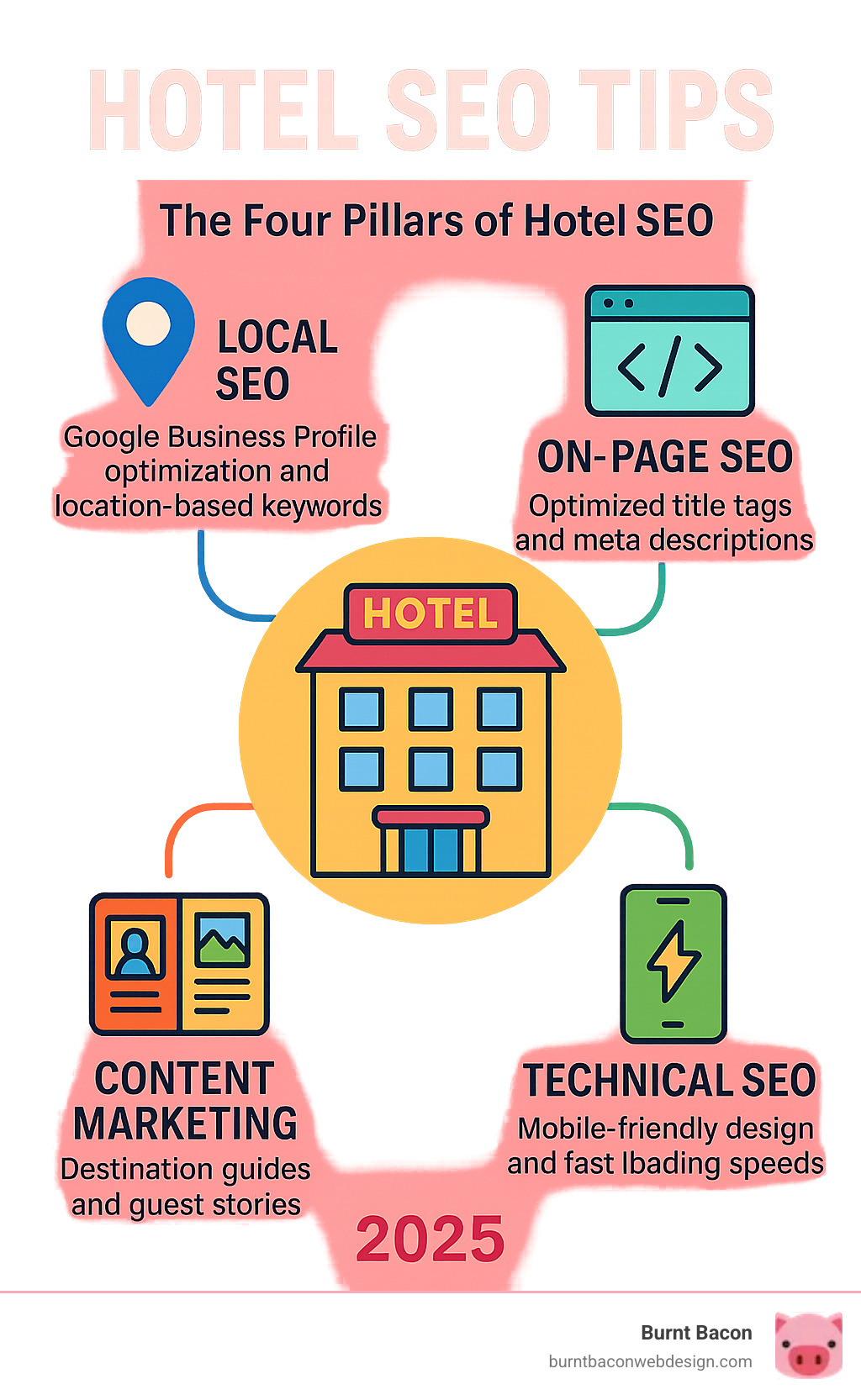
Quick Hotel SEO Tips Overview:
- Local SEO: Optimize your Google Business Profile and target location-specific keywords
- On-Page Optimization: Create compelling title tags, meta descriptions, and fast-loading pages
- Content Marketing: Publish destination guides, local event roundups, and guest stories
- Technical SEO: Ensure mobile-friendliness, fast page speeds, and proper schema markup
- Backlink Building: Partner with local businesses and tourism boards for quality links
- Review Management: Actively encourage and respond to guest reviews
The hospitality industry is fiercely competitive. With 75% of travelers beginning their hotel search on Google, your property must appear in those crucial first-page results. Poor SEO means potential guests can’t find you, sending them to competitors or forcing you to rely on expensive online travel agencies.
Good hotel SEO changes everything. It drives high-intent visitors directly to your website, increases brand visibility, and puts more money in your pocket through commission-free bookings. As a Utah-based agency with over 10 years of experience, we’ve seen how the right SEO strategy transforms a property’s booking performance, from boutique hotels in Park City to business hotels in downtown Salt Lake City. Let us walk you through the proven strategies that will fill your rooms and boost your revenue.
The Foundation: Mastering Keywords and Content Strategy
Your website without a keyword strategy is like a hotel lobby with no signs—confusing and frustrating. Keywords are your digital signage, guiding guests from a Google search to your website. It’s not about stuffing pages with terms; it’s about understanding what a traveler planning their Utah vacation is thinking.
This is where smart content marketing comes in. Instead of just listing amenities, you create helpful information that answers real questions and showcases your property’s unique character. Every blog post about local hiking trails or a guide to Park City’s best restaurants becomes a pathway for future guests to find you. A well-planned content strategy builds trust and can dramatically impact your Website Traffic and Sales: What Affects Organic Keyword Search? performance.
Mastering Keyword Research: The Foundation of Your Hotel SEO Tips
Keyword research is where every successful hotel SEO tips strategy begins. The secret isn’t chasing the most popular keywords, but finding the ones that match what your ideal guests are searching for.
Understanding search intent is key.
- Informational: “things to do in Salt Lake City with kids”
- Commercial: “best family hotels near Temple Square”
- Transactional: “book hotel room Park City tonight”
- Navigational: Your hotel’s name
For hotels, focusing on commercial and transactional keywords delivers the best results, as these searchers are close to making a reservation.
Long-tail keywords often outperform broad terms. Ranking for “Utah hotels” is nearly impossible. Instead, targeting a specific phrase like “pet-friendly boutique hotel in downtown Salt Lake City” brings fewer, but far more qualified, visitors. We’d rather have 10 people ready to book than 1,000 just browsing. Start by thinking like your guests and use tools like Google Keyword Planner to find keywords with decent search volume and manageable competition.
Leveraging Content Marketing: Advanced Hotel SEO Tips
Content marketing is about becoming the trusted local expert for travelers planning their Utah adventure. By creating helpful content that answers questions like “best family hikes near Salt Lake City,” your hotel appears early in their research process.
- Destination Guides: Create comprehensive guides to your local area’s attractions, dining, and events. A hotel in South Jordan could publish “Hidden Gems in Salt Lake Valley.”
- Local Event Roundups: Keep a blog updated with upcoming festivals, concerts, and seasonal activities to capture searches like “events in Park City this weekend.”
- Guest Stories & Testimonials: Use real visitor experiences and positive reviews as authentic social proof to build trust.
- FAQ-Style Content: Answer common questions like “What’s the best time to ski near Salt Lake City?” to help visitors and optimize for voice search.
- Update Existing Content: Regularly refresh old blog posts with new information, updated hours, and current keywords. Search engines love fresh content, and it’s one of the most effective SEO tactics.
Focus on providing genuine value. When your content helps people plan better trips, they’ll remember your hotel when it’s time to book.
On-Site and Technical Hotel SEO Tips for a Flawless User Experience
Your website is your digital front desk—it’s where first impressions are made. Visitors decide in seconds whether to stay or leave. Google knows this, making user experience, through Core Web Vitals and mobile-first indexing, a major ranking factor. A slow or confusing site sends potential guests straight to your competitors.
Technical SEO isn’t just for search engines; it’s about creating a smooth experience that encourages bookings. A comprehensive technical SEO audit, like the Competitive SEO Analysis we offer Utah hotels, often reveals quick wins that improve both user experience and search visibility.
Optimizing On-Page Elements
On-page elements act as clear signage for both users and search engines.
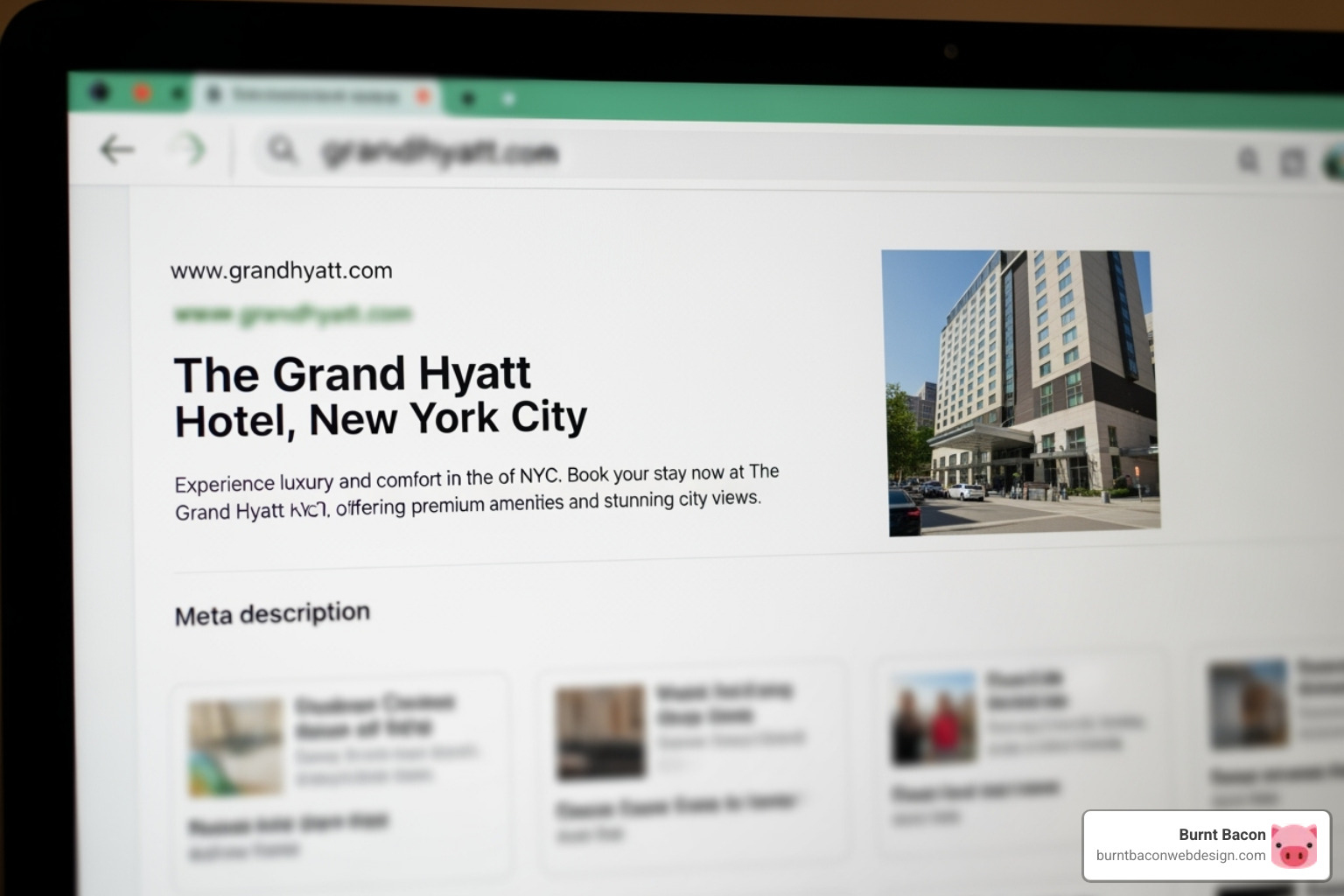
- Title Tags: Your 50-60 character elevator pitch in search results. Example: “Luxury Ski Resort Hotel in Park City | Mountain View Suites.”
- Meta Descriptions: Your ~160 character ad copy. While not a direct ranking factor, a compelling description with a call-to-action (“Book direct and save!”) drives clicks.
- URL Structure: Keep it clean and keyword-rich, like
yourhotel.com/luxury-suites-salt-lake-city, notyourhotel.com/page?id=12345. - Header Tags (H1, H2, H3): Organize content like a menu. The H1 is your main headline, and H2s break up content into scannable sections.
- Internal Linking: Link between related pages (e.g., from a blog post about your spa to the spa services page) to keep visitors engaged and help Google understand your site structure.
Enhancing Site Performance and Structure
Page speed is critical. If your site takes more than three seconds to load, you’ll lose nearly half your visitors. Our Website Speed Optimization Services helped one Salt Lake City hotel increase direct bookings by 40% just by improving load times. Check your performance with Google’s PageSpeed Insights.
- Image Optimization: Compress images to ensure they load quickly without losing quality. Use descriptive file names and add alt text to describe each image for accessibility and SEO.
- Mobile-Friendliness: This is non-negotiable. Most travelers browse on their phones, and Google uses your mobile site for ranking (mobile-first indexing).
- Schema Markup: This structured data gives Google a detailed brochure about your hotel, helping your listings stand out with rich snippets like star ratings and prices.
- Other Essentials: Ensure you have an SSL certificate (the lock icon), an XML sitemap for search engines, and consistent NAP (Name, Address, Phone number) information everywhere online.
These technical hotel SEO tips are investments that pay dividends in rankings and direct, commission-free bookings.
Dominate Your Area: Local SEO and Off-Page Authority
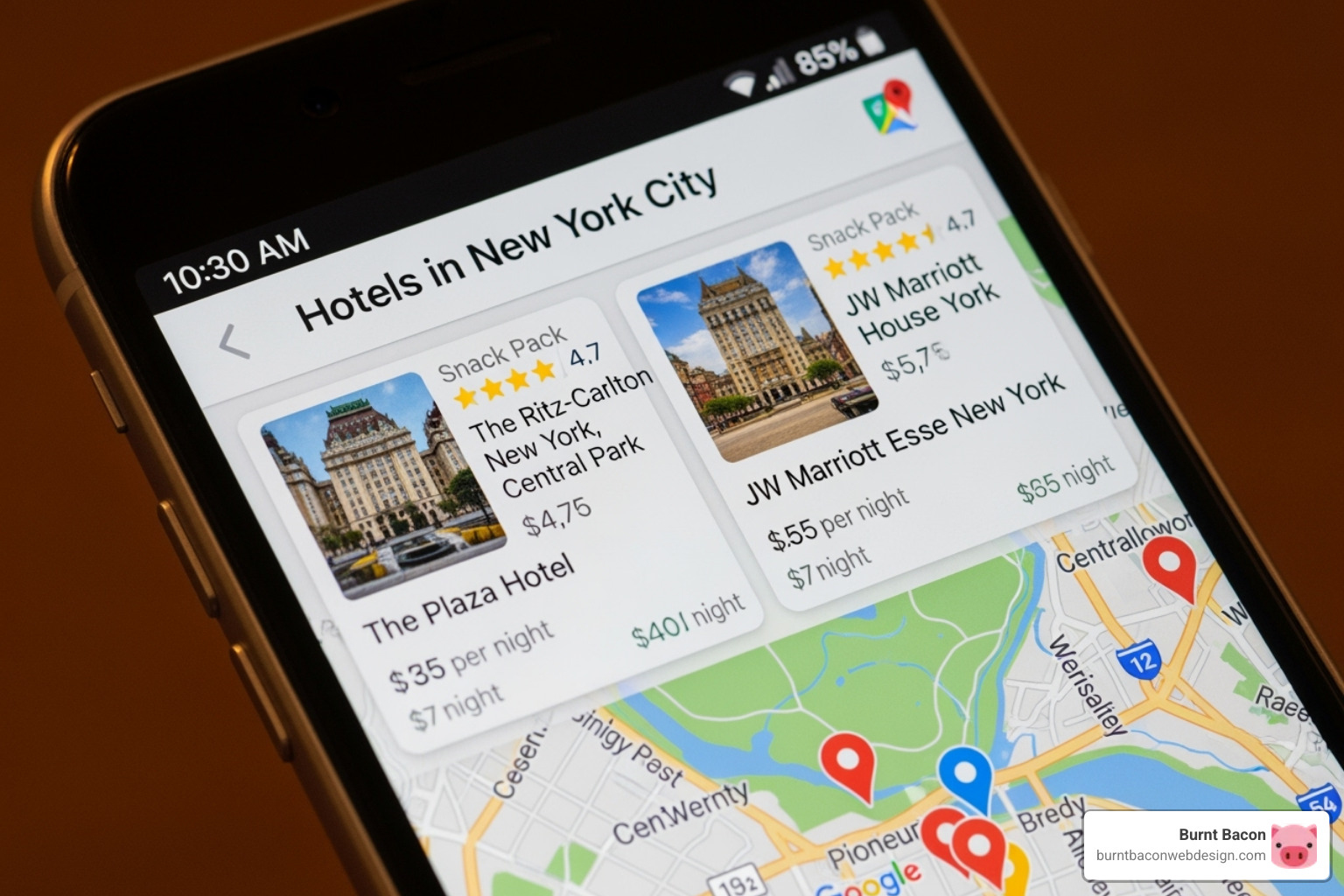
Imagine a family driving through Utah searching “hotels near me with pool.” If your hotel doesn’t appear in Google’s “snack pack,” you’ve lost a booking. For hotels in Salt Lake City, Park City, or South Jordan, local SEO is your digital storefront, capturing high-intent travelers ready to book now.
Local search combines location with immediate need. Searches like “boutique hotel downtown Salt Lake City” have high commercial intent. Beyond search results, local SEO builds authority through partnerships and backlinks. When reputable local organizations link to your site, it tells Google you’re a credible part of the community. As we’ve seen with our clients, there are 5 Reasons Why You Will Love Local SEO Salt Lake City, and the results are powerful.
Maximizing Your Google Business Profile
Your Google Business Profile (GBP) is your most important local SEO tool. It’s your free, digital concierge on Google and Google Maps. To optimize it:
- Claim and Complete: Verify your profile and fill out every section, choosing the most specific category (e.g., “Hotel”).
- Use High-Quality Photos: Upload at least 100 stunning images of your lobby, rooms, and amenities. More photos lead to more engagement.
- Ensure NAP Consistency: Your Name, Address, and Phone number must be identical across your website, GBP, and all other online directories.
- Manage Guest Reviews: Actively encourage reviews and respond to every one, both positive and negative. This builds trust and improves rankings.
- Use Google Posts & Q&A: Share updates, promotions, and events with Posts. Proactively answer common questions in the Q&A section.
- Update Regularly: Frequent updates signal to Google that your business is active, which can lead to more clicks. We can help Boost Your Local Reach: Attract More Visitors to Your Google Business Profile and turn searches into bookings.
Building a Strong Backlink Profile
A quality backlink is a vote of confidence from another website. It tells Google your hotel is trustworthy and authoritative.
- Local Partnerships: Collaborate with nearby restaurants, attractions, and tour companies for cross-promotion and valuable links.
- Tourism Boards & Directories: Get listed on official Utah tourism sites, local chambers of commerce, and reputable travel directories.
- Guest Blogging: Write for travel or local lifestyle blogs to showcase your expertise and earn a link back to your site.
- Press Releases: Announce newsworthy events like renovations or new amenities to gain coverage from local media.
- Sponsor Local Events: Sponsoring Utah community events or charities often results in a quality backlink from the event website.
- Create Linkable Assets: Develop unique content, like an in-depth city guide or infographic, that other sites will want to link to.
Focus on quality over quantity. A few authoritative local links are far more valuable than hundreds of spammy ones. This comprehensive approach to Off-Page SEO establishes your hotel as a local leader.
Advanced Strategies and Measuring Success
With a solid foundation, it’s time for advanced strategies to dominate your market. This phase is about fine-tuning your approach with data-driven decisions. Our focus on Google Ranking Improvement means we’re always seeking the competitive edge that translates into more revenue.
Optimizing for Voice Search and Emerging Tech
“Hey Google, find a pet-friendly hotel with a pool near Park City.” With over 50% of searches now voice-based, optimizing for it is essential.
Voice searches are conversational, longer, and more specific, like “What’s the best family hotel near Temple Square?” To capture them, structure your content to answer questions directly. FAQ pages are perfect for this, as they mirror the question-and-answer format voice assistants use.
Focus on “near me” searches, as travelers often look for hotels on the go. To be the top suggestion, structure your content with concise, natural language that Siri or Google Assistant can easily read aloud.
Tracking Key Performance Indicators (KPIs)
If you’re not measuring your SEO, you’re flying blind. These are the hotel SEO tips metrics that matter most:
- Organic Traffic: How many people find you via search engines. The goal is to attract qualified visitors who are likely to book.
- Keyword Rankings: Your position in search results for key terms like “business hotel downtown Salt Lake City.” Use Google Search Console to track this for free.
- Conversion Rate: The percentage of website visitors who make a reservation. This is the ultimate measure of whether your SEO is driving revenue.
- Bounce Rate & Session Duration: These metrics show if visitors find your site valuable. Low bounce rates and longer sessions are positive signals to Google.
- Local SEO Metrics: Track clicks, calls, and direction requests from your Google Business Profile. These actions represent high-intent travelers.
- Return on Investment (ROI): Compare your SEO spend to the revenue from organic bookings to prove your efforts are profitable.
Regularly analyzing these KPIs allows you to refine your strategy, ensuring your efforts consistently bring qualified travelers to your website and convert them into guests.
Frequently Asked Questions about Hotel SEO
Running a hotel while mastering digital marketing is a challenge. Based on our 10 years of experience helping Utah businesses, here are answers to the most common questions we hear from hotel owners about hotel SEO tips.
How long does it take for hotel SEO to show results?
SEO is a long-term investment, not an overnight fix. You can typically expect to see initial movement in rankings and traffic within 3-6 months. However, the most significant, business-driving results often appear between 6-12 months as your efforts compound.
Consistency is crucial. Hotels that stick with a strategy for a full year see exponential growth, while those who quit early remain dependent on costly OTA commissions.
Should my hotel focus on broad or long-tail keywords?
The best strategy uses both, but for different purposes.
Broad keywords like “Utah hotels” are good for general brand visibility and capturing travelers in their early research phase. However, they are extremely competitive.
Long-tail keywords are where you drive bookings. A search for “hotel near Salt Palace Convention Center” or “boutique hotel with rooftop bar in downtown Salt Lake City” shows high intent. These visitors are ready to book. It’s better to attract 10 visitors ready to book than 1,000 who are just browsing.
How does SEO reduce my reliance on Online Travel Agencies (OTAs)?
This is one of the most powerful benefits of hotel SEO. Every direct booking you get through your website is a commission-free booking. Instead of paying 15-25% to an OTA, you keep that revenue.
Beyond saving money, direct bookings allow you to:
- Own the customer relationship: You get their contact info for future marketing and loyalty programs.
- Control your brand story: On your site, you can showcase what makes you unique, rather than competing solely on price.
Many Utah hotels we’ve worked with have successfully shifted their booking mix, reducing OTA dependence and significantly increasing profitability. The goal is a healthy balance where direct bookings form the majority of your revenue. That’s when you know your hotel SEO tips are working.
Conclusion: Check In to Better SEO and More Bookings
Imagine your hotel’s phone ringing with direct reservations instead of paying hefty commissions to booking sites. That’s the power of implementing these hotel SEO tips strategically and consistently.
We’ve covered the essentials: keyword research to connect with guests, content marketing to become a local expert, technical optimization for a flawless user experience, and local SEO to put you on the map. SEO isn’t a one-time task; it’s an ongoing investment that grows stronger over time.
As a Utah-based agency, we’ve seen how the right strategy transforms local businesses, from Park City bed-and-breakfasts to downtown Salt Lake City business hotels. The fundamentals are simple: be findable, be helpful, and be better than your competition.
Your potential guests are searching on Google right now. The question is: will they find you?
Ready to make sure they do? Get a free audit of your Hotel Website Optimization and let’s start filling your rooms with guests who book direct.